
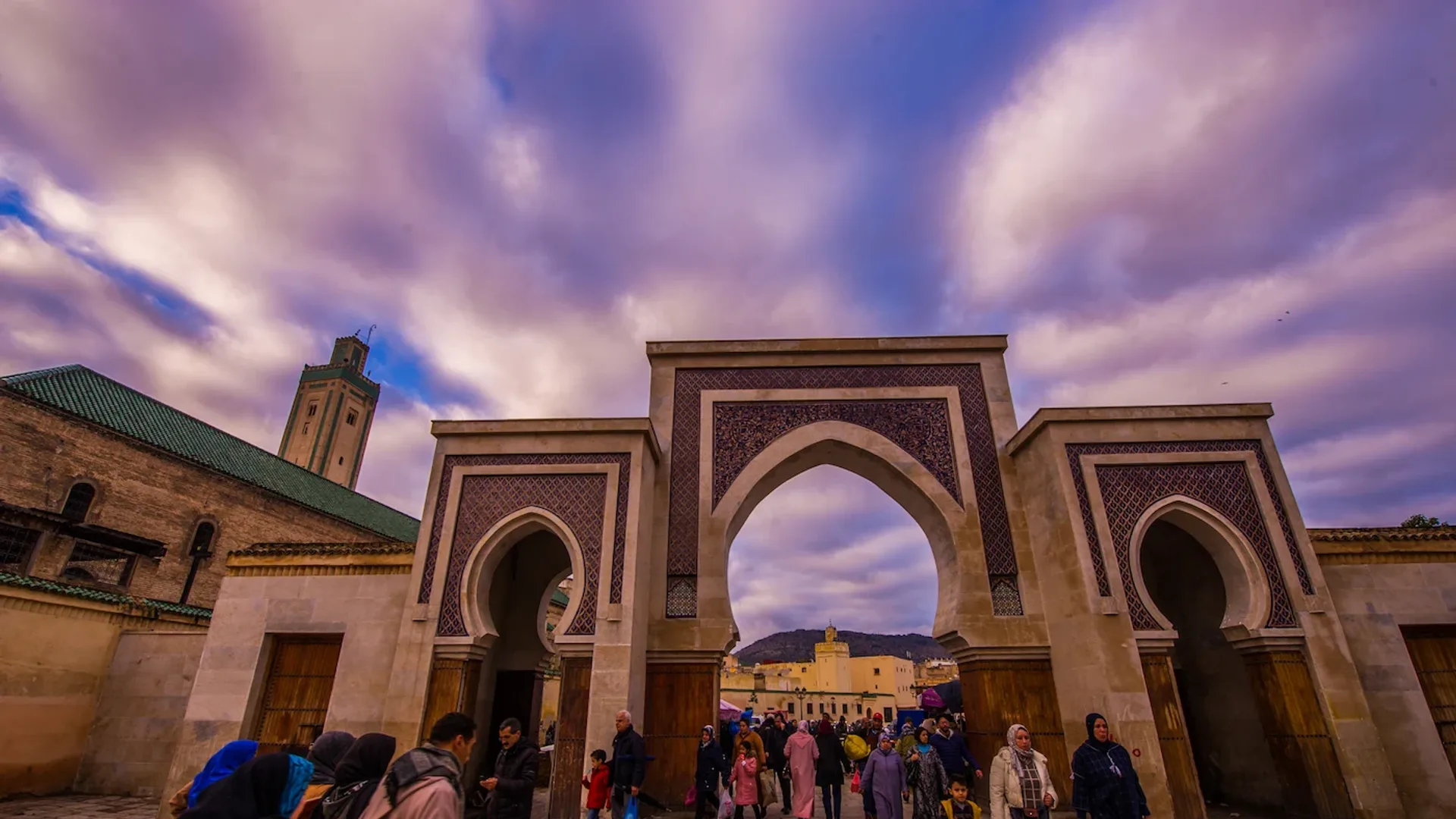
Fes el-Bali is the historic core of Fes, founded in the late 8th and 9th centuries and inscribed as a UNESCO World Heritage Site in 1981. It is widely cited as the largest car-free urban area in the world: a dense warren of thousands of lanes and dead-end derbs, too narrow for vehicles, where goods still move by handcart and by mule and donkey. Losing your bearings here is part of the experience — and something every first-time visitor does.
The medina is organised, loosely, by trade. There are quarters for coppersmiths hammering trays around the Place Seffarine, for weavers and tailors, for the spice and perfume sellers of the Attarine souk, and for the tanners at Chouara. Threaded among them are the great monuments — the Qarawiyyin mosque and university founded in 859, the Marinid madrasas, and dozens of historic fondouks (merchants' inns) now given over to artisans. Food stalls, bakeries feeding dough into communal ovens and mint-tea terraces fill the gaps between.
This is the one place in Fes where going with a licensed private guide genuinely pays for itself: the alleys defeat GPS, and a guide steers you past the aggressive touts, gets you into workshops, and keeps a coherent thread through what would otherwise be hours of backtracking. On a private tour your driver drops you at one gate and collects you at another, so you walk the medina straight through rather than doubling back to a car.
Highlights
- Trade quarters — coppersmiths at Place Seffarine, weavers, dyers and spice sellers
- The Qarawiyyin mosque and university, founded in 859
- The Marinid madrasas of Attarine and Bou Inania
- Historic fondouks now housing artisan workshops
- The Chouara tannery reached through the leather souk
- Communal bakeries, mint-tea terraces and mule-borne trade in the lanes
Best Time to Visit
Start in the morning when workshops open and the souks are busy but not yet peak; allow at least half a day and a licensed guide.