
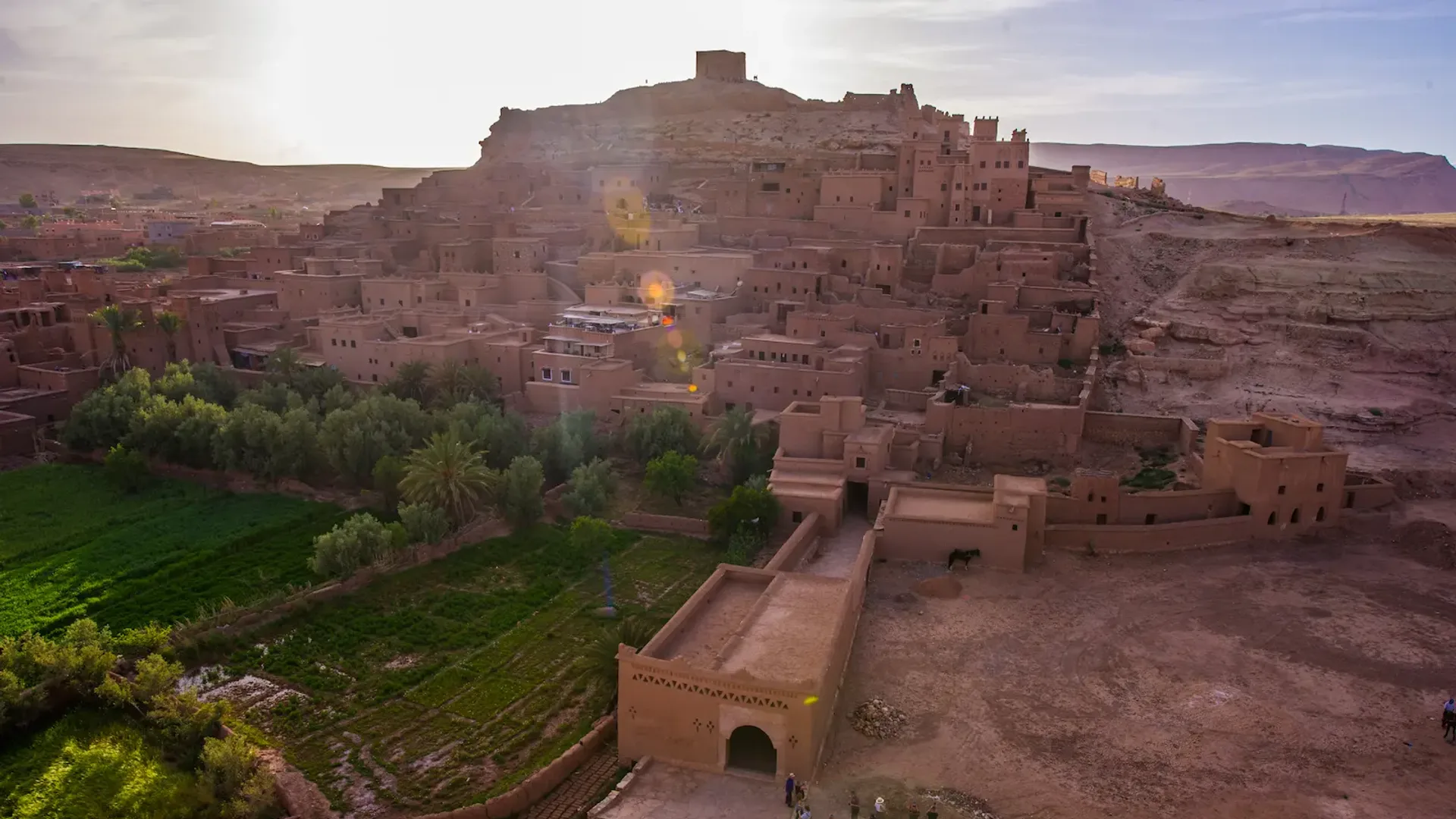
Telouet Kasbah sits in a high valley just off the Tizi n'Tichka pass, the old caravan road linking Marrakech to the south. It was the ancestral seat of the Glaoui clan, and from here Thami El Glaoui — the last Pasha of Marrakech — extended his control over the mountain trade routes in the first half of the 20th century. When the family fell from power after Morocco's independence in 1956, the kasbah was abandoned and left to decay.
From the outside it looks crumbling and half-collapsed, its rammed-earth walls slowly returning to the ground. Step inside, though, and a few preserved rooms are astonishing: intricate zellige mosaics, carved and painted cedar ceilings, sculpted stucco and coloured-glass windows survive from the palace's brief, lavish heyday. The contrast between the ruined exterior and the dazzling salons is what makes Telouet memorable.
Telouet lies off the main highway on a side road, and it is often combined with Ait Benhaddou via the scenic Ounila valley back road. A private driver handles the winding mountain approach and the rough side road, so you can focus on the interiors and the landscape rather than the logistics of getting there and back.
Highlights
- The preserved zellige mosaic salons hidden behind the ruined outer walls
- Carved and painted cedar ceilings from the Glaoui palace's heyday
- Coloured-glass windows and sculpted stucco in the reception rooms
- The dramatic contrast between the crumbling exterior and ornate interior
- The setting in a high valley just off the Tizi n'Tichka pass
- The scenic Ounila valley back road linking Telouet to Ait Benhaddou
Best Time to Visit
Visit late spring through autumn when the mountain roads are clearest of snow; mid-morning light suits the interiors, and it is far quieter than the busier valley kasbahs.