Chefchaouen: Visiting Morocco's Blue City
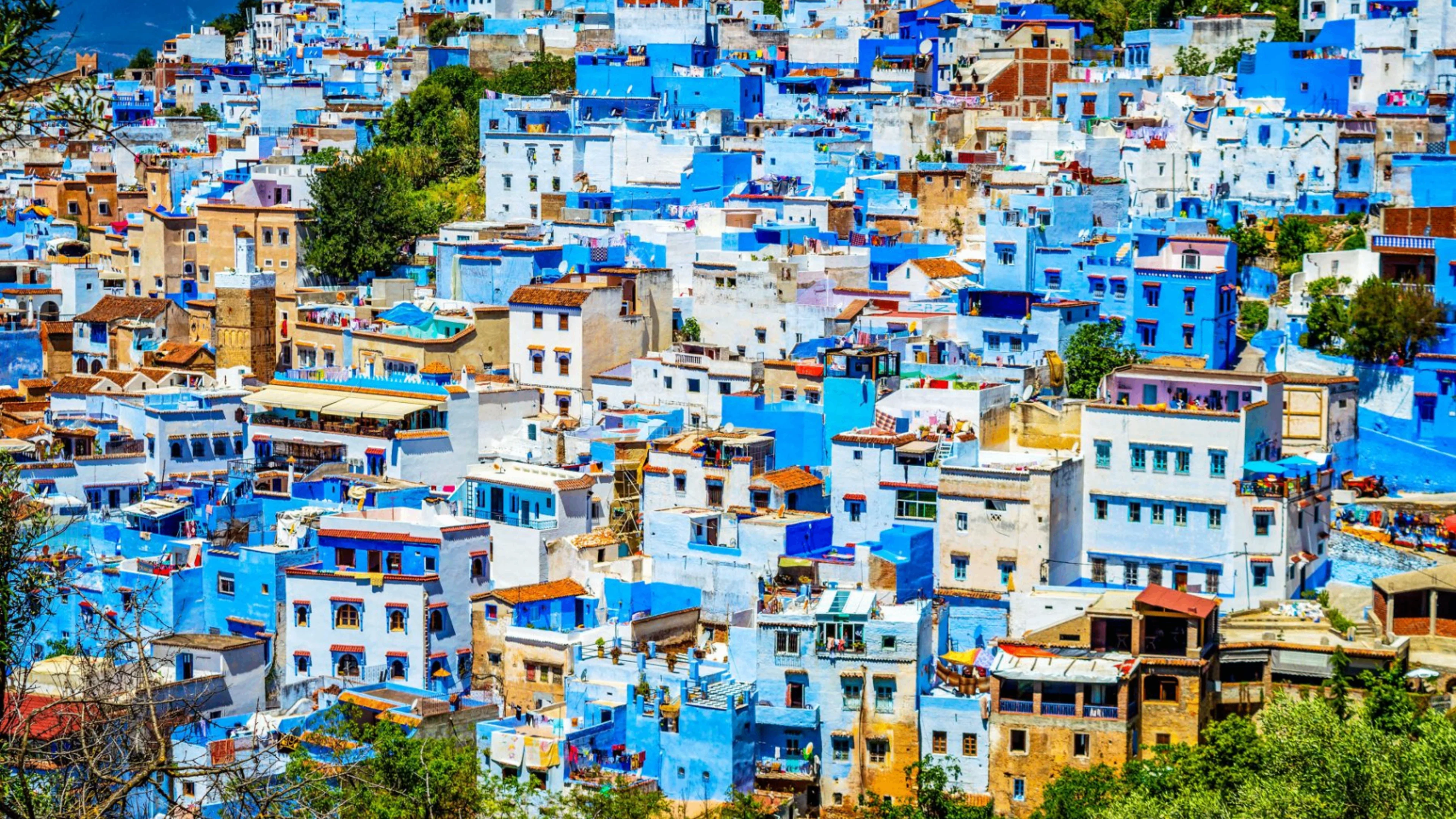
Chefchaouen spills down the Rif mountains in a hundred shades of blue — powder-blue lanes, indigo doorways, cobalt stairways dotted with flowerpots. Morocco's most photographed town is also one of its calmest: smaller, cooler and gentler than the imperial cities. Here is what to know before you go: why it is blue, how to actually get there, what to do beyond the photos, and whether to day-trip or stay the night.
Why Is Chefchaouen Blue?
Founded in 1471 as a mountain fortress against Portuguese incursions, Chefchaouen spent centuries closed to outsiders. The blue came later, and nobody fully agrees on why. The most-repeated story credits Jewish refugees who settled here in the 1930s and painted their quarter blue to evoke the sky and the divine. Locals will also tell you blue keeps mosquitoes away, or that it keeps houses cool in summer. Whatever the origin, the town leans into it: residents repaint constantly, and the blue deepens street by street as you climb into the old medina.
Getting There (It's Further Than You Think)
Chefchaouen has no airport and no railway station, which is precisely why it stayed so unspoilt. Every visit starts with a road trip through the Rif:
- From Tangier — about 115 km, 2 to 2.5 hours. The most practical base for a day trip, and the standard route for cruise passengers calling at Tangier.
- From Fes — about 200 km, 3.5 to 4 hours through the mountains. A long but popular day, or better as an overnight leg between the two cities.
- From Casablanca or Rabat — 4.5 to 5+ hours. Doable, but plan to sleep in Chefchaouen rather than turn straight around.
- From Marrakech — too far for a day trip. Break the journey in Fes or Rabat.
The Rif roads twist and climb, and public transport means a bus to the new town followed by a walk uphill with your bags. A private driver takes the logistics off the table entirely: our private Chefchaouen day trips start at 2,800 MAD per vehicle for up to 9 guests, with pickup from your hotel in Tangier or Fes and the return timed to suit you, not a bus timetable.
What to See and Do
Plaza Uta el-Hammam and the Kasbah
The medina's main square is where Chefchaouen slows down: café tables under the plane trees, the red-brown Kasbah on one side and the Grand Mosque's unusual octagonal minaret on the other. The Kasbah's small museum and garden are worth the modest entrance fee (around 60 MAD for foreign visitors) mainly for the tower view over the blue rooftops.
The blue lanes
The postcard streets cluster in the higher, older quarters northeast of the plaza. There is no checklist here — the pleasure is drifting, turning at whim, and finding a stairway bluer than the last. Go before 09:00 and you will have the lanes almost to yourself; by late morning the most famous corners have queues of people waiting to take the same photo.
Ras el-Maa
At the medina's eastern edge, a mountain spring tumbles out of the rock. It is where local women still wash wool and rugs, and where the town ends abruptly and the Rif begins. The riverside cafés just below are a good mint-tea stop.
The Spanish Mosque viewpoint
The 30–40 minute walk up to the abandoned Spanish Mosque, built in the 1920s and never used, delivers the classic panorama: the whole blue town cupped in the mountains. Go for the hour before sunset, and carry water — the path is easy but exposed.
See it with someone who grew up here. Our Chefchaouen walking tours start at 900 MAD for one to four guests (1,200 MAD for five to eight, 1,500 MAD for nine to thirteen), led by a licensed local guide who knows which lanes the crowds miss. Free cancellation up to 48 hours ahead. Book a Chefchaouen walking tour.
Photography Etiquette
The blue city is lived-in, not a film set. A few rules keep it friendly. Ask before photographing residents — a smile and "mumkin soura?" (may I take a photo?) goes a long way, and accept a no gracefully. A couple of the most Instagram-famous doorways and stair-sets are maintained by the families who live there; a small tip (5–10 MAD) if you pose on their doorstep is fair. Keep tripods out of the narrow lanes at busy times, and skip the drone — it will not be welcome over the medina.
Day Trip or Overnight?
From Tangier, a day trip works well: two hours each way leaves four to five hours in town, enough for the plaza, the lanes, lunch and Ras el-Maa. From Fes it is a longer day — roughly eight hours of driving wrapped around four hours of Chefchaouen — worth it if it is your only chance, but tiring.
If you can spare the night, do. Chefchaouen belongs to its guests-in-residence at the edges of the day: blue hour on the plaza, empty lanes at 08:00, breakfast on a rooftop with the call to prayer echoing off the mountains. Day-trippers see the town; overnighters feel it.
When to Visit
April to June and September to October are the sweet spots — clear mountain light, 20–28°C, and the Rif green from the rains. Midsummer is hot at midday but noticeably cooler than Fes or Marrakech; winters are crisp, with cold nights and a real chance of rain (this is one of the wetter corners of Morocco). Two rhythm notes: shops shutter around Friday midday prayers, and during Ramadan (which shifts about 11 days earlier each year) daytime cafés are quieter and evenings come alive after sunset.
FAQ
Why is Chefchaouen painted blue?
No single confirmed reason. The leading explanations are the 1930s Jewish community painting their quarter to evoke the sky and heaven, mosquito deterrence, and keeping houses cool. Today it is simply the town's identity, renewed with every repainting.
Can I visit Chefchaouen as a day trip from Tangier?
Yes — it is the best base for one. The drive is 2 to 2.5 hours each way, so an 08:30 pickup gets you four to five relaxed hours in the blue city and back to Tangier for dinner. Our private day trips run door-to-door with free cancellation up to 24 hours before pickup.
Is one day enough for Chefchaouen?
One day covers the medina, the Kasbah, Ras el-Maa and the viewpoint comfortably — the town is small. Photographers and slow travellers should stay a night for the empty morning lanes and evening light.
What should I wear?
Chefchaouen sits at around 600 m in the mountains, so bring a layer even in summer evenings, and good shoes for the steep, polished-stone lanes. Dress modestly in the medina, as anywhere in Morocco — shoulders and knees covered keeps everyone comfortable.
Is Chefchaouen safe?
It is one of Morocco's most relaxed towns for visitors. Normal medina sense applies — mind your phone in crowds. You may be quietly offered kif (the Rif is a cannabis-growing region); a polite, firm "la, shukran" ends the conversation. If you are combining the blue city with a wider route, see our things to do in Morocco guide for pairing ideas.