Photography in Morocco: The Best Spots and Etiquette
Morocco may be the most photogenic country within four hours of Europe: blue-washed lanes, dye pits unchanged since the Middle Ages, dunes that turn copper at sunset. Yet the best shots depend less on gear than on two things — being in the right place at the right hour, and knowing the etiquette that keeps your camera welcome.
Both are learnable. This guide works through the five locations that reward photographers most, the specific light and timing at each, and the unwritten (and written) rules about photographing people, police and prayer — the part most visitors get wrong.
Chefchaouen: shoot before breakfast
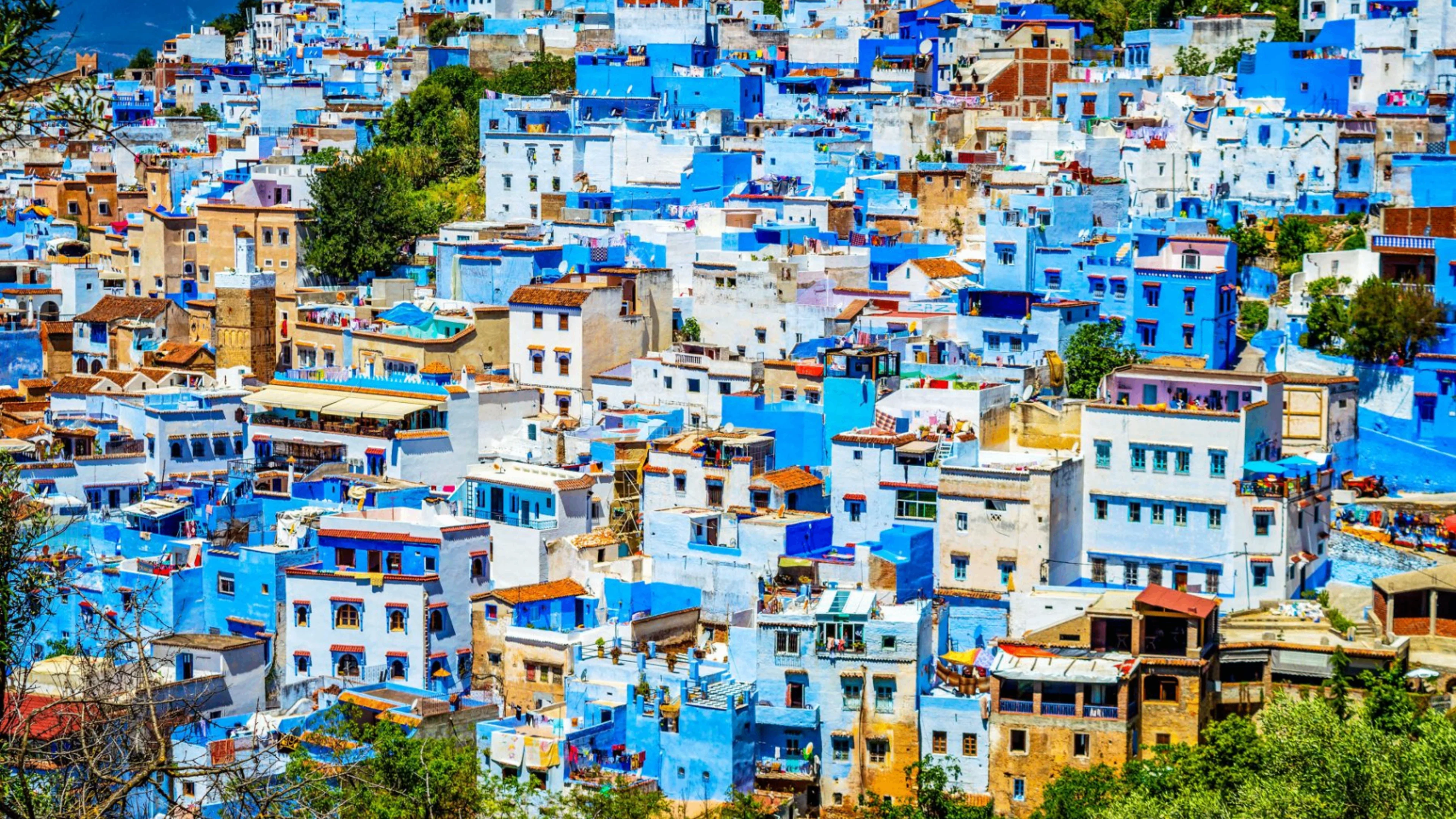
The blue city is Morocco's most photographed place, and the difference between a postcard and a cliché is entirely about clock time. Between roughly 7 and 9 am the lanes are empty, the light is soft and directional, and shopkeepers are setting out ceramics rather than crowds. By 11 am, day-trip groups fill every famous staircase. Stay the night before, shoot at dawn, and you will have the medina's best corners — the blue stairways of the Al-Andalus quarter, cats on cobalt doorsteps, the kasbah walls — almost to yourself. A licensed guide on our Chefchaouen walking tour knows which lanes catch the early sun and which residents genuinely welcome photographers at their famous doorways (a few charge a small posted fee — pay it cheerfully; it is their front door).
Fes: the tanneries reward early risers
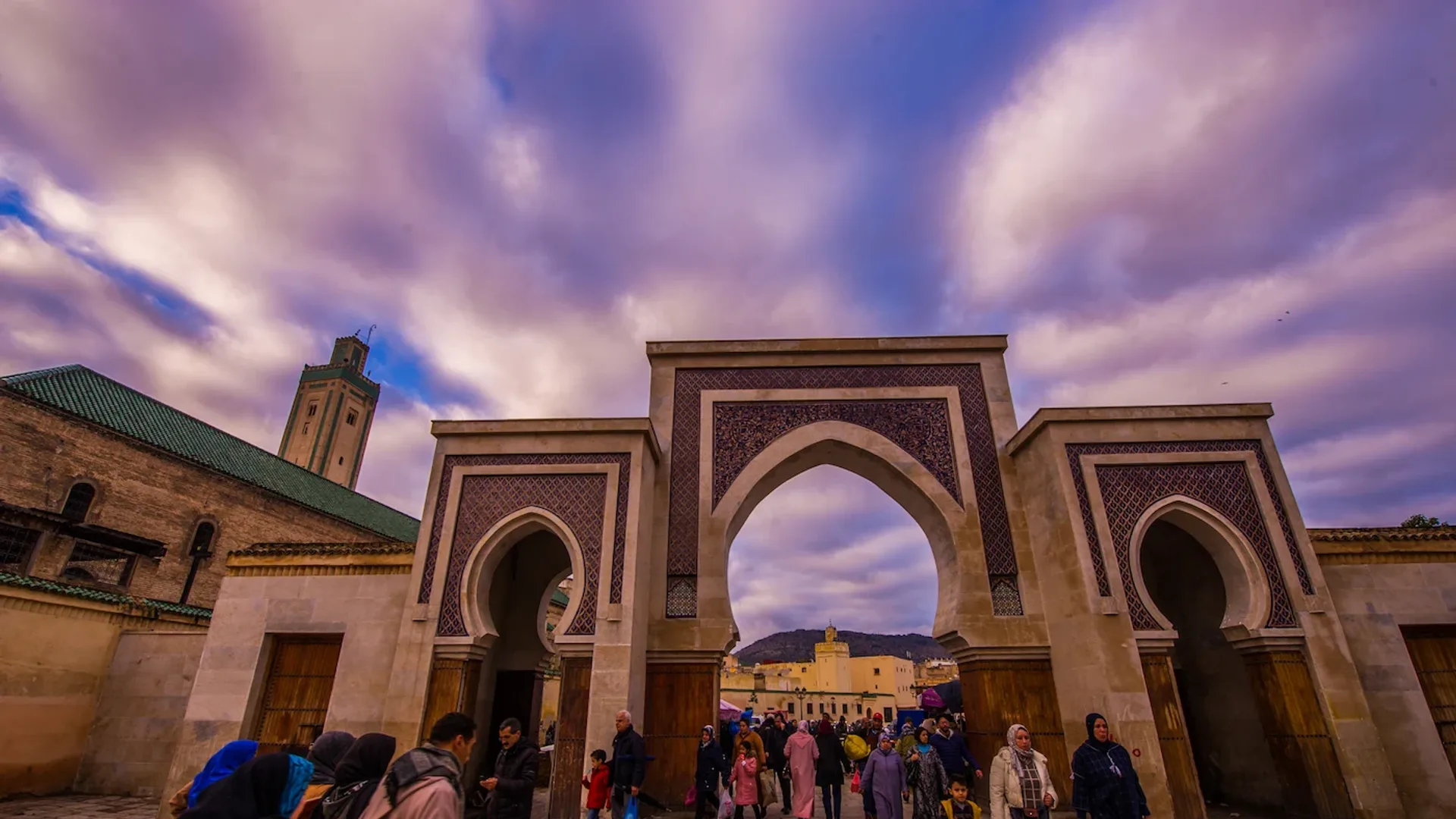
The Chouara tannery — that hallucinatory grid of stone dye vats — is best photographed in the morning: the pits are freshly filled and at their most vivid, the workers are active, and the light rakes across the vats before the midday flatness (the famous smell is also gentler early). Access is via the terraces of the surrounding leather shops; a small tip or browse is the expected fair exchange for the viewpoint. Beyond Chouara, the Fes medina is a study in light shafts — sun cutting through reed-covered souk roofs onto brass and fabric. It is also the easiest place in Morocco to get lost, which is why photographers do well on our Fes medina walking tour, where a licensed local guide handles navigation while you handle composition.
Marrakech: build your day around dusk
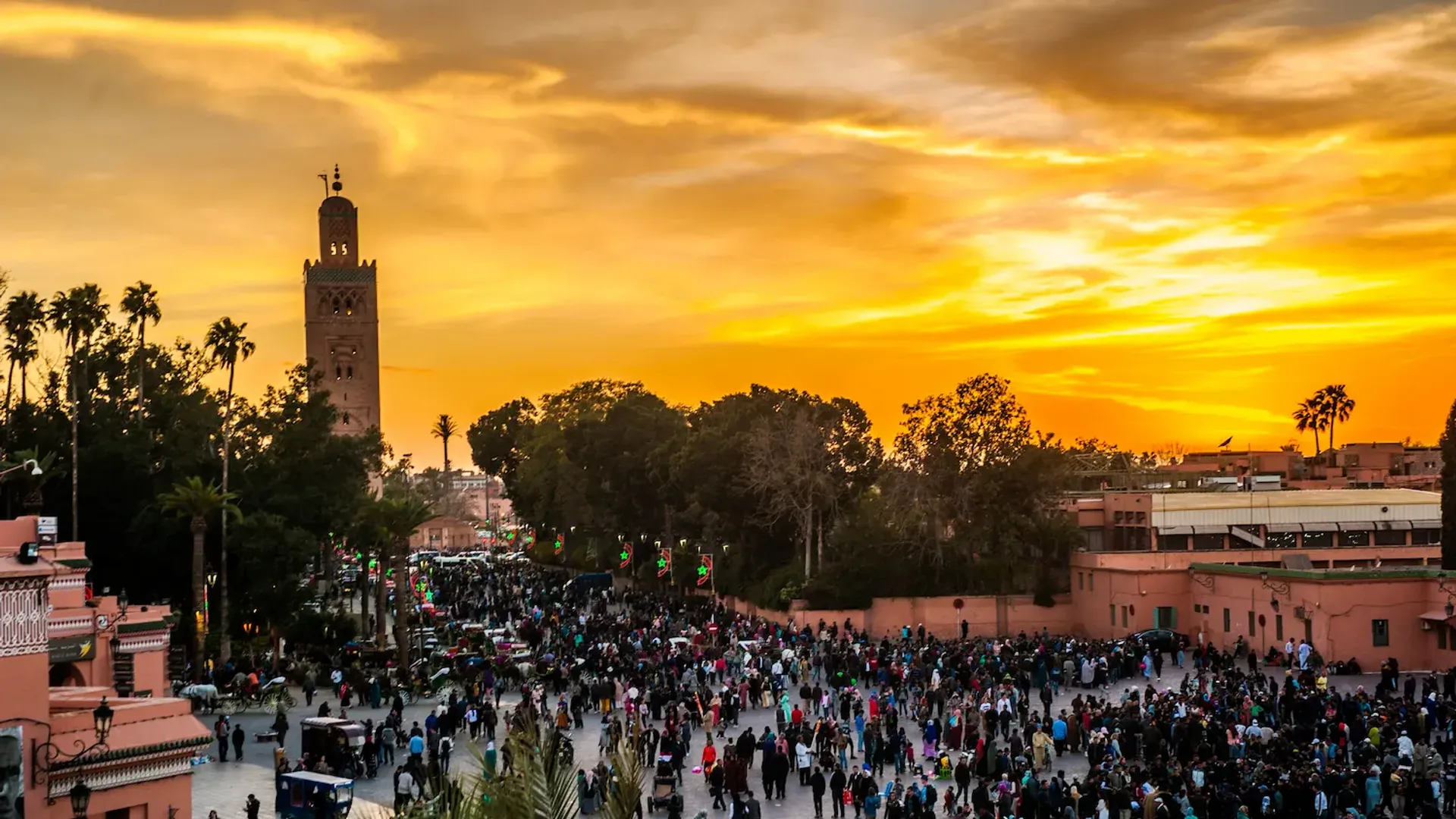
Marrakech photography has one non-negotiable appointment: Jemaa el-Fnaa comes alive at dusk, and the classic shot — smoke rising off the food stalls, the Koutoubia silhouetted, the square dissolving into lanterns and motion — is taken from a rooftop café terrace in the half hour after sunset. Arrive early to claim a rail-side table. Daytime belongs to the souks (light shafts, spice pyramids, artisans at work) and Jardin Majorelle, where the cobalt villa demands the first online timed-ticket slot of the morning for clean frames — book ahead, and note the adjoining YSL museum closes on Wednesdays. One quirk worth knowing: the souks go quiet around Friday midday for prayers — fewer people, shuttered stalls, and a very different, emptier mood that some photographers seek out deliberately. Our Marrakech medina walking tour threads the best of it with a guide who knows which artisans are happy on camera.
Chasing the light? Tell us your shot list on WhatsApp and we will build a private itinerary around golden hours, not coach schedules — walking tours with a licensed local guide start at 900 MAD. Plan a photography-first tour.
The Sahara: golden hour, times two
Nothing in Morocco out-photographs the Erg Chebbi dunes at Merzouga. The routine is simple: shoot the hour after sunrise and the hour before sunset, when low sun carves the dunes into ridges of copper and shadow; rest in the middle of the day. In July and August that is not merely an aesthetic choice — midday heat at Merzouga is extreme, punishing for you and your equipment alike. Practicalities: sand is the enemy, so change lenses inside a bag or not at all, carry a blower, and keep gear sealed on the camel. Stay for night: desert camps sit under some of the darkest skies you will ever point a camera at, and even a phone on a small tripod will pull down the Milky Way.
Essaouira and the coast: working light
Essaouira is the photographer's antidote to medina intensity: an Atlantic fishing port where blue boats, silver sardine catches and clouds of gulls compose themselves every morning, framed by 18th-century ramparts. The port is at its most alive early, when the catch lands; the ramparts and beach belong to the late, gold light. The constant trade wind means dramatic skies and spray — protect your lens near the harbour wall. It is a working port above all, so the etiquette below applies double here: fishermen mid-labour deserve a greeting and a request, not a lens in the back. Our Essaouira walking tour pairs the port, the medina and the ramparts in a single unhurried loop.
The etiquette that keeps your camera welcome
This is the section to remember when everything else fades. The rules are few, but they are real:
- Always ask before photographing people. A smile, a gesture with the camera, "mumkin soura?" ("may I take a photo?"). Accept a no gracefully — rural areas and older women especially deserve this courtesy.
- Performers work for tips. The musicians, water-sellers and snake charmers of Jemaa el-Fnaa are professionals; a photo is a transaction. Have 10–20 dirham coins ready and agree before shooting, not after an argument.
- Never photograph police, military, checkpoints, airports or border posts. This is the one rule with legal teeth, and it is enforced.
- Mosque interiors are closed to non-Muslims — the celebrated exception is Casablanca's Hassan II Mosque, which non-Muslims may photograph inside on the official guided tour slots. Everywhere else, shoot minarets and doorways from the street and stay clear of entrances at prayer times.
- Leave the drone at home. Morocco heavily restricts drones; bringing one in without prior official authorisation risks confiscation at customs. None of the shots in this guide need one.
- Markets are workplaces. Buy something, or at least greet the stallholder, before treating a spice pyramid as a studio set.
Travelling with family? Children often unlock the warmest portrait permissions of all — see our Morocco with kids guide — and for planning the wider route, start with things to do in Morocco.
Frequently asked questions
Do I need permission to photograph people in Morocco?
Ethically and practically, yes — always ask first, and expect performers and some artisans to want a small tip (10–20 MAD is normal). Unposed wide street scenes are generally fine; identifiable close-ups without consent are not, and rural areas are more conservative than the big-city squares.
Can I bring a drone to Morocco?
Effectively no. Drones are heavily restricted and require prior official authorisation that tourists very rarely obtain; undeclared drones are routinely confiscated at the airport. Plan your shots from rooftops, ramparts and dunes instead.
What is the single best time of day for photography in Morocco?
The hour after sunrise, everywhere. Chefchaouen's lanes are empty, the Fes tanneries are vivid and freshly filled, Essaouira's port is landing the catch, and desert dunes are at their most sculpted. Dusk is the one exception that beats it — but only in Marrakech, over Jemaa el-Fnaa.
How do I protect my camera in the desert?
Treat sand like water: sealed bags, no lens changes in open air, a blower not a cloth for the front element, and everything zipped during the camel ride. Avoid midday shooting in summer — Merzouga's July–August heat is extreme and batteries and sensors suffer with you.
Is a guide worth it for photography?
In the medinas, yes, disproportionately. A licensed local guide handles navigation, timing and — crucially — introductions, turning suspicious glances into invitations. Our walking tours run for 1 to 13 guests and start at 900 MAD for smaller groups, and any itinerary can be rebuilt around light rather than lunch.