Money in Morocco: Dirhams, Cards and Daily Costs
Morocco's currency is the dirham (MAD) — a closed currency you essentially cannot buy before you arrive. That one fact drives most of the money decisions on a Moroccan trip. Here is how to get cash, when cards work, and what a day actually costs in 2026.
The dirham: a closed currency
The Moroccan dirham is officially non-convertible outside Morocco. In practice that means three things. You will not get a sensible rate (or often any dirhams at all) from your bank at home. Officially you may carry no more than 2,000 MAD in or out of the country, so plan to arrive with foreign cash or a card and leave with your dirhams spent. And when you change money inside Morocco, keep the exchange receipts — banks and airport bureaux may ask for them if you want to convert leftover dirhams back at the end of your trip.
Rates move, but as a mental anchor in mid-2026 one US dollar buys roughly 10 dirhams and one euro roughly 10.5–11. The arithmetic shortcut — knock off a zero for dollars — is close enough for souk decisions.
One quirk worth knowing before you shop: in some souks and rural markets, older sellers still quote prices in rials (20 rials = 1 dirham) or in centimes. If a quoted number sounds absurd in either direction, just confirm: "b'dirham?"
Getting dirhams: ATMs, exchange offices and the airport
ATMs are the workhorse. Every city and most towns have machines from Attijariwafa, Banque Populaire, BMCE/Bank of Africa and others. Withdrawal limits are commonly 2,000–4,000 MAD per transaction, and many machines add a local fee of around 30–35 MAD on foreign cards — Al Barid Bank (post office) ATMs are frequently reported fee-free, making them a favourite with travellers. Two universal rules: withdraw larger amounts less often to dilute fees, and when the machine offers to convert to your home currency, always decline and choose dirhams — that "convenience" (dynamic currency conversion) hides a poor exchange rate.
Exchange offices (bureaux de change) in city centres change euros, dollars and pounds at decent posted rates with no commission — the rate on the board is what you get. Moroccan airport bureaux are also reasonable by world standards; changing enough for your first day on arrival is perfectly sensible.
Cards versus cash: where each one works
Cards have spread fast in the cities. Visa and Mastercard work at riads, hotels, supermarkets, petrol stations, mid-range and upmarket restaurants, and increasingly by contactless in Marrakech, Casablanca and Rabat. American Express acceptance is thin — bring a Visa or Mastercard as your primary.
Cash still rules everywhere that makes Morocco Morocco: the souks, street food, petit taxis, small cafés, public hammams, tips and rural anything. A workable split for most travellers is cards for accommodation and bigger restaurant bills, cash for everything under about 200 MAD. And hoard small change deliberately — 5, 10 and 20 MAD pieces are the lubricant of Moroccan daily life, as our tipping in Morocco guide explains in detail.
Want the big costs locked in before you land? Book your tours direct with us at a fixed, upfront price — private driver tours in Casablanca start at 2,400 MAD per vehicle for up to 9 guests, with free cancellation up to 24 hours before and WhatsApp-first support. In port for a day or between flights? See our Casablanca cruise excursions and Casablanca layover tours, or browse all tours.
What things actually cost in 2026
Third-party prices, so treat as typical rather than guaranteed:
- Mint tea at a café: 10–20 MAD
- Street food (msemen, a bowl of harira, a brochette sandwich): 5–35 MAD
- Tagine at a local restaurant: 40–80 MAD
- Main course at a tourist restaurant: 90–180 MAD
- Petit taxi across town (metered): 15–40 MAD
- Big bottle of water (supermarket): 5–7 MAD
- Bahia Palace entry (Marrakech): around 100 MAD for foreign visitors
- Jardin Majorelle: around 170 MAD — book the online timed ticket in advance, and note the YSL museum next door closes Wednesdays
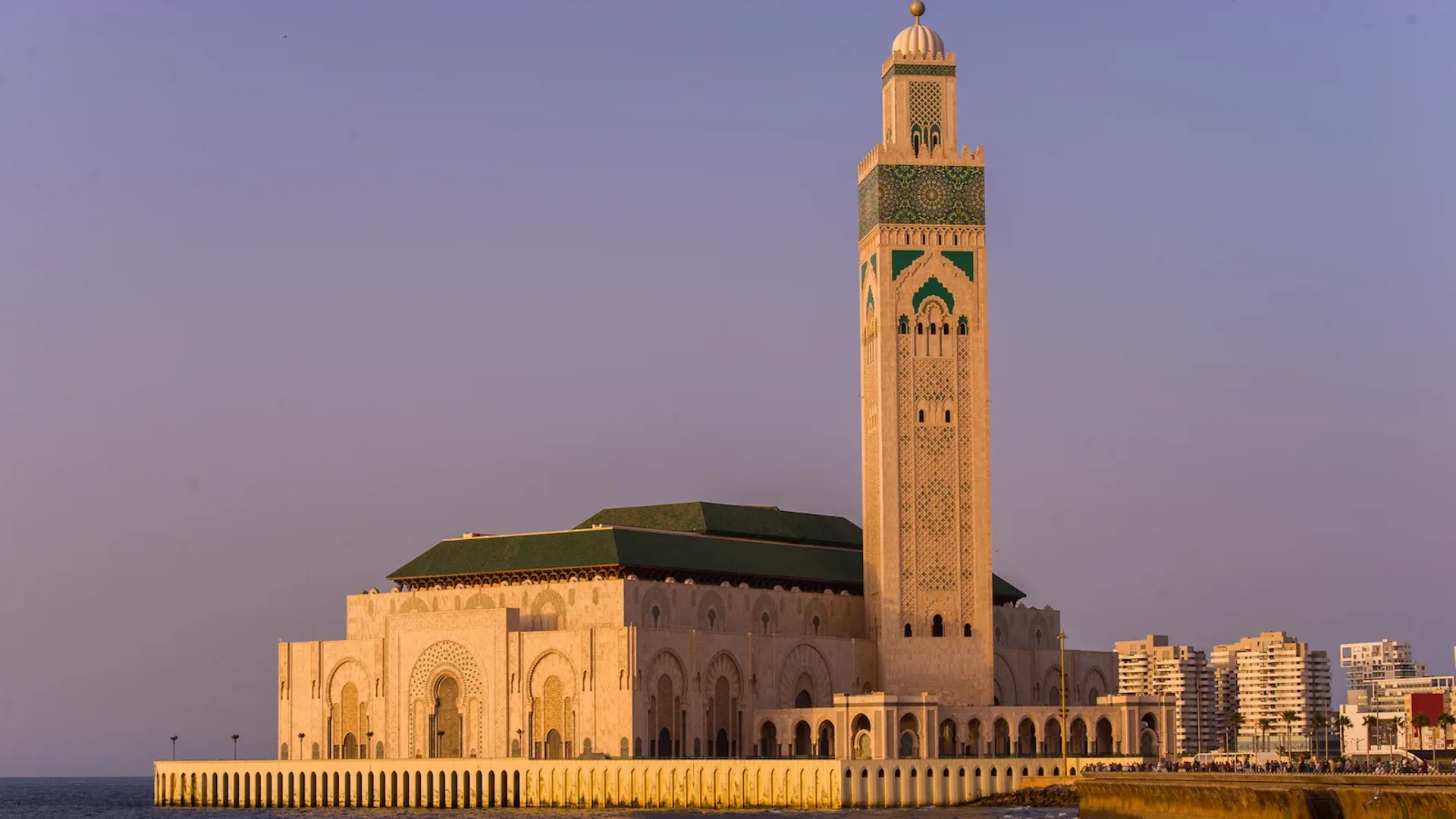
- Hassan II Mosque guided tour (Casablanca): around 150 MAD — the official tour slots are the only way in for non-Muslims
- Public hammam: 20–50 MAD entry; a spa-style hammam ritual runs 200–600+ MAD
A realistic daily budget outside accommodation: a careful traveller eats and moves well on 250–400 MAD per day; a comfortable mid-range day with a nice dinner, a couple of monument entries and taxis is more like 500–800 MAD.
Haggling: what is negotiable and what is not
Prices are fixed at supermarkets, pharmacies, restaurants, metered taxis and anywhere with printed labels. They are negotiable in the souks — expected, even, for carpets, leather, lamps and souvenirs. Open friendly, counter somewhere well below the first quote, and remember the only "right" price is one you are happy with. Two timing notes: souks are noticeably quiet around Friday midday prayers, and a first-sale-of-the-day buyer often gets the warmest deal. If you would rather shop with an advocate at your side, a licensed guide on our Marrakech medina walking tour changes the entire dynamic — walking tours with a licensed local guide start at 900 MAD.
Common money mistakes to avoid
Accepting dynamic currency conversion at ATMs and card terminals (always pay in dirhams). Arriving with only large 200 MAD notes and no way to break them — spend big notes at supermarkets early. Letting anyone "help" you at an ATM. Paying in euros in the souk — some stalls accept them, but at a rate that quietly costs you 10–20%. And carrying your whole trip's cash on a medina walk: take what the day needs and leave the rest in the riad safe.
FAQ
Can I buy Moroccan dirhams before I travel?
Effectively no — the dirham is a closed currency, and the official limit for carrying it across the border is 2,000 MAD in either direction. Arrive with euros, dollars or pounds to exchange, or simply use an ATM at the airport, and spend down your dirhams before you leave.
Are ATMs easy to find in Morocco?
Very, in any city or sizeable town — Marrakech, Fes and Casablanca have machines on every commercial street. Fees on foreign cards are commonly around 30–35 MAD per withdrawal (Al Barid Bank machines are often fee-free), so make fewer, larger withdrawals. Stock up on cash before heading into the Atlas or the desert, where machines thin out fast.
Can I pay by card in Morocco?
In cities, yes for hotels, riads, supermarkets and most mid-range-and-up restaurants, with Visa and Mastercard far better accepted than Amex. The souks, street food, taxis and tips remain cash territory. When a terminal offers to charge you in your home currency, decline and pay in dirhams.
How much cash should I carry per day?
For most travellers, 400–600 MAD per person per day covers food, taxis, entries and tips comfortably, with cards handling the bigger bills. Keep it in two places, favour small notes, and treat the 200 MAD note as something to break at every opportunity.
Is Morocco expensive to visit?
By European standards, no — eating brilliantly and moving around town are cheap, and the money goes on experiences: monuments, hammams, guided days and desert trips. Timing your visit also matters; see our best time to visit Morocco guide for when prices dip.