The Souks of Marrakech: Shopping and Haggling Guide
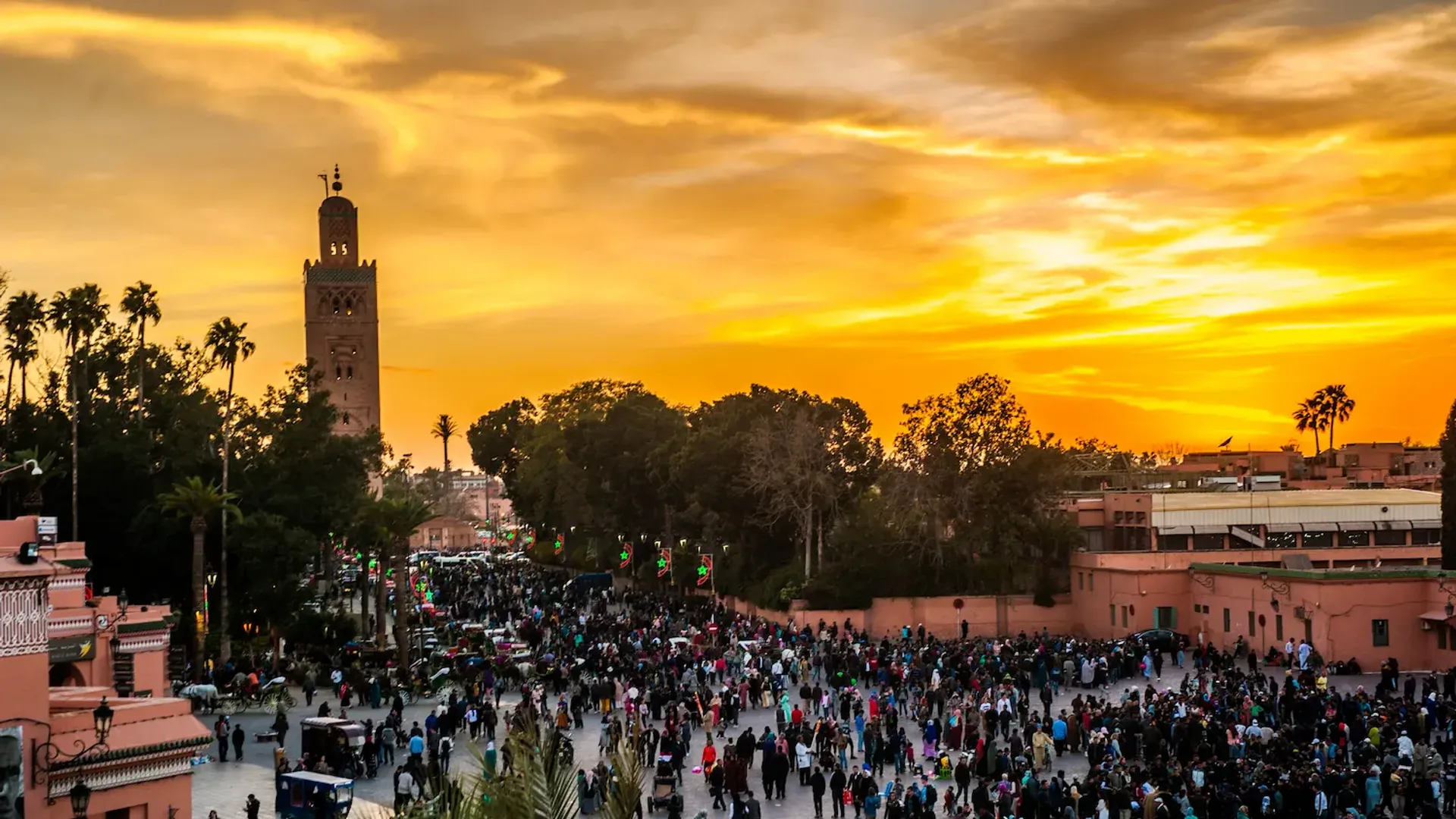
The souks of Marrakech are a covered maze of several thousand stalls packed into the alleys north of Jemaa el-Fnaa, and they reward preparation more than any other sight in Morocco. Here is how the market is actually laid out, what things genuinely cost, when to go, and how to haggle without souring the exchange — from the licensed guides who walk these lanes every day.
How the souks are laid out
The souks look like chaos but follow a medieval logic: each trade has its own quarter. Souk Semmarine is the broad main artery running north from the square — the tourist-facing spine of kaftans, slippers and lanterns. Push deeper and the specialisms appear: Rahba Kedima, the open spice square ringed by apothecaries and basket sellers; the Criée Berbère, the old carpet auction yard where rug dealers still hold court; Souk el Attarine for brass and perfume; Souk Haddadine, where you hear the blacksmiths before you see them; Souk Sebbaghine, the dyers' quarter with skeins of wool drying in colour-blocked hanks overhead; and Souk Cherratine for leather.
Getting lost is not a risk, it is the format. Phone GPS half-works under the covered sections, so navigate by landmarks — the square is always south, and any shopkeeper will point you to Semmarine. Or take our medina walking tour first and let a licensed guide install the mental map; the souks are far easier alone once someone has decoded them for you.
When to go
Mornings, roughly 9–11am, are the sweet spot: stalls open, alleys uncrowded, shopkeepers unhurried and — thanks to a widely held superstition that the first sale of the day brings luck — often flexible on price. Late afternoon into early evening is the full sensory crush, better for atmosphere than transactions.
Two timing notes. The souks go quiet around Friday midday, when many stallholders close for the main weekly prayers — good for photographing empty lanes, poor for shopping; trade resumes by late afternoon. And in summer, even covered alleys bake between noon and three; shop mornings, retreat for lunch, return at five.
What to buy — and roughly what to pay
Prices below are typical third-party street ranges after normal bargaining, in dirhams. They vary with quality, season and your patience — that is the point of the next section.
- Babouches (leather slippers): 80–250 MAD; hand-stitched, dyed leather sits at the top of the range.
- Lanterns and brass: small candle lanterns 150–300 MAD; large hanging pieces 400–700+.
- Leather bags and poufs: 250–800 MAD depending on size and stitching; unstuffed poufs pack flat.
- Argan oil: genuine cosmetic-grade argan runs roughly 100–200 MAD per 100ml. If it is dramatically cheaper, it is cut with something else.
- Saffron and spices: real saffron is sold as whole deep-red threads, never powder — expect around 30–50 MAD per gram. The bright orange "saffron" sold cheap by the mound is safflower.
- Rugs: honest handmade pieces start around 800–1,500 MAD for small flatweaves and climb into the tens of thousands for large vintage carpets. Nobody buys a rug well in a hurry.
How to haggle without being a jerk
Haggling in the souks is expected, social and — done right — enjoyable on both sides. The working rules:
- Only open negotiations if you are genuinely interested. Asking prices for sport wastes goodwill.
- Let the seller name the first number. Counter somewhere around a third to half of it, delivered with a smile, and work towards the middle.
- Keep it light. It is a conversation with theatre, not combat. Humour moves prices further than irritation ever will.
- Walking away is your strongest move — and often triggers the real final price at your back.
- Agree the total before money appears, and carry small notes; a 200-dirham note can mysteriously produce no change.
- An agreed price is a deal. Backing out after shaking on it is genuinely rude. If you would not pay the number, do not say yes to it.
Mint tea over a rug negotiation is normal hospitality, not a trap — accepting carries no obligation to buy. And if you want a baseline before entering the fray, the fixed-price Ensemble Artisanal on Avenue Mohammed V shows quality government-vetted crafts at marked prices.
Shop the souks with someone who has no stake in what you buy. Our Marrakech walking tours with a licensed local guide start at 900 MAD for one to four guests — real workshops, honest context on quality and price, free cancellation up to 48 hours before. Ask us on WhatsApp to build shopping time into your route.
Pressure, fakes and the "it's closed" trick
The souks are safe; the annoyances are commercial, not criminal. The classics to recognise: unofficial "guides" who insist the square or your street is closed and helpfully reroute you to a cousin's shop — it is never closed, keep walking with a polite "la, shukran". "Antique" rugs aged last month with tea and sunshine — check the back: handmade knots are slightly irregular, machine weaves are perfect. Saffron that is safflower, amber that is plastic, and argan oil at prices real argan cannot meet.
Marrakech's tanneries generate their own hustle — touts wave sprigs of mint and promise a free viewing that ends in a hard sell. The honest version: Marrakech's tanneries are modest, and if tanneries are why you came, Fes has the spectacular one. The vast Chouara tannery is best seen in the morning, when the dye pits are freshly filled and working — it is a highlight of our Fes medina walking tour.
Take a guide for the first pass
The single best souk strategy is two visits: a guided first pass to learn the geography, the workshops and the fair-price ranges, then a return alone to buy at your own pace. Our licensed guides take you to artisans actually making things — the coppersmiths, the loom sheds, the slipper stitchers — and will happily referee a negotiation if you want backup. Walking tours run for 1 to 13 guests (900 MAD covers one to four; 1,200 MAD for five to eight; 1,500 MAD for nine to thirteen), and slot naturally into a full one-day Marrakech itinerary. When the shopping is done, the square next door deserves its own evening — see our Jemaa el-Fnaa guide.
Frequently asked questions
Is haggling expected everywhere in Marrakech?
In the souks, yes — marked prices are rare and opening prices assume negotiation. It is not expected in pharmacies, supermarkets, restaurants or fixed-price craft outlets like the Ensemble Artisanal. When in doubt, a friendly "best price?" tells you instantly which regime you are in.
Are the souks open on Fridays?
Yes, but expect a lull around midday when many stallholders close for Friday prayers. Mornings run close to normal and the lanes are back to full volume by late afternoon. Sunday mornings are also quieter than the rest of the week.
How do I know argan oil is real?
Price and provenance. Genuine argan takes hours of hand-cracking per litre, so 30-dirham bottles are cut or fake. Buy from women's co-operatives or reputable herbalists, expect roughly 100–200 MAD per 100ml for cosmetic grade, and check it smells nutty rather than of nothing.
Can my driver wait while I shop?
Vehicles cannot enter the medina, but on our private Marrakech tours your driver waits at the nearest gate for as long as the souks hold you — pricing is per vehicle for the day, so a longer rug negotiation costs you nothing extra.