Marrakech to Sahara Desert Tour: The Complete Guide
The road from Marrakech to the Sahara is Morocco's greatest drive: 560 km over the High Atlas, past mud-brick kasbahs and palm-filled canyons, ending at the giant orange dunes of Erg Chebbi. This guide covers the route stage by stage, how many days you genuinely need, the best months to travel, and how to book it without the classic mistakes — chief among them trying to squeeze it into two days.
The route at a glance
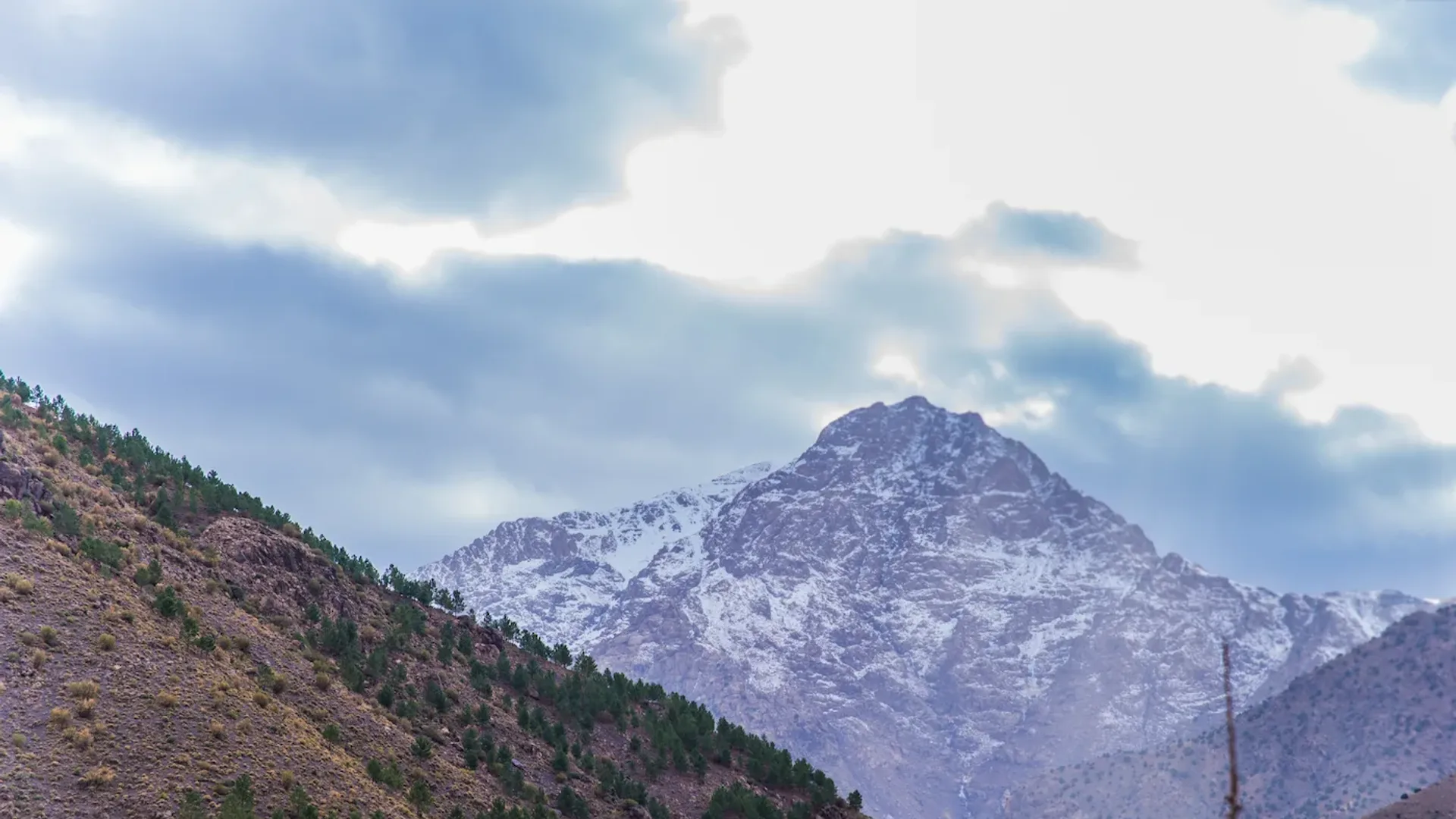
Almost every Sahara desert tour from Marrakech follows the same spine, because the geography allows no shortcut. You cross the Atlas at the Tizi n'Tichka pass (2,260 m), drop into the pre-Saharan south at Ouarzazate, then run east along the old caravan valleys until the tarmac ends at Merzouga.
| Leg | Distance | Driving time | Worth stopping for |
|---|---|---|---|
| Marrakech → Tizi n'Tichka → Aït Benhaddou | ~190 km | 3.5–4 h with stops | Pass viewpoints, the UNESCO ksar of Aït Benhaddou |
| Aït Benhaddou → Ouarzazate → Dades Valley | ~140 km | 2.5 h | Atlas Studios, Skoura palm grove, Rose Valley |
| Dades → Todra Gorge → Erfoud | ~180 km | 3 h | 300 m canyon walls, oasis walks |
| Erfoud → Merzouga (Erg Chebbi) | ~50 km | 1 h | Arrival at the dunes for the sunset camel trek |
Add it up and you are looking at roughly ten hours of driving each way. That single number explains most of the advice in this article.
How many days do you need?
Three days is the honest minimum. Day one gets you over the Atlas to the Dades Valley, day two delivers you to the dunes for a sunset camel trek and a night in camp, day three is the long run home. It works, and it is the most-booked format, but days one and three are big driving days.
Four days is the sweet spot. The extra night — usually in Ouarzazate or at Aït Benhaddou — turns the return leg from an endurance test into a second day of sightseeing, with time for the film studios or a slow walk through the ksar.
Two days does not reach Merzouga. Agencies selling a "2-day Sahara tour from Marrakech" are almost always taking you to Zagora, a different and much smaller desert. That can still be a good trip, but it is not Erg Chebbi — see our comparison of Merzouga vs Agafay vs Zagora before you book.
Day by day: the classic 3-day itinerary
Day 1 — Marrakech to the Dades Valley. An early start matters; ask your driver for a 7:00–8:00 pickup. You climb the switchbacks of the Tizi n'Tichka, stop at the pass, then detour to Aït Benhaddou for a walk through the fortified village that has stood in for half of Hollywood's deserts. Lunch in Ouarzazate, then the afternoon run through Skoura's palm grove and the Rose Valley to a guesthouse at the mouth of the Dades Gorge.
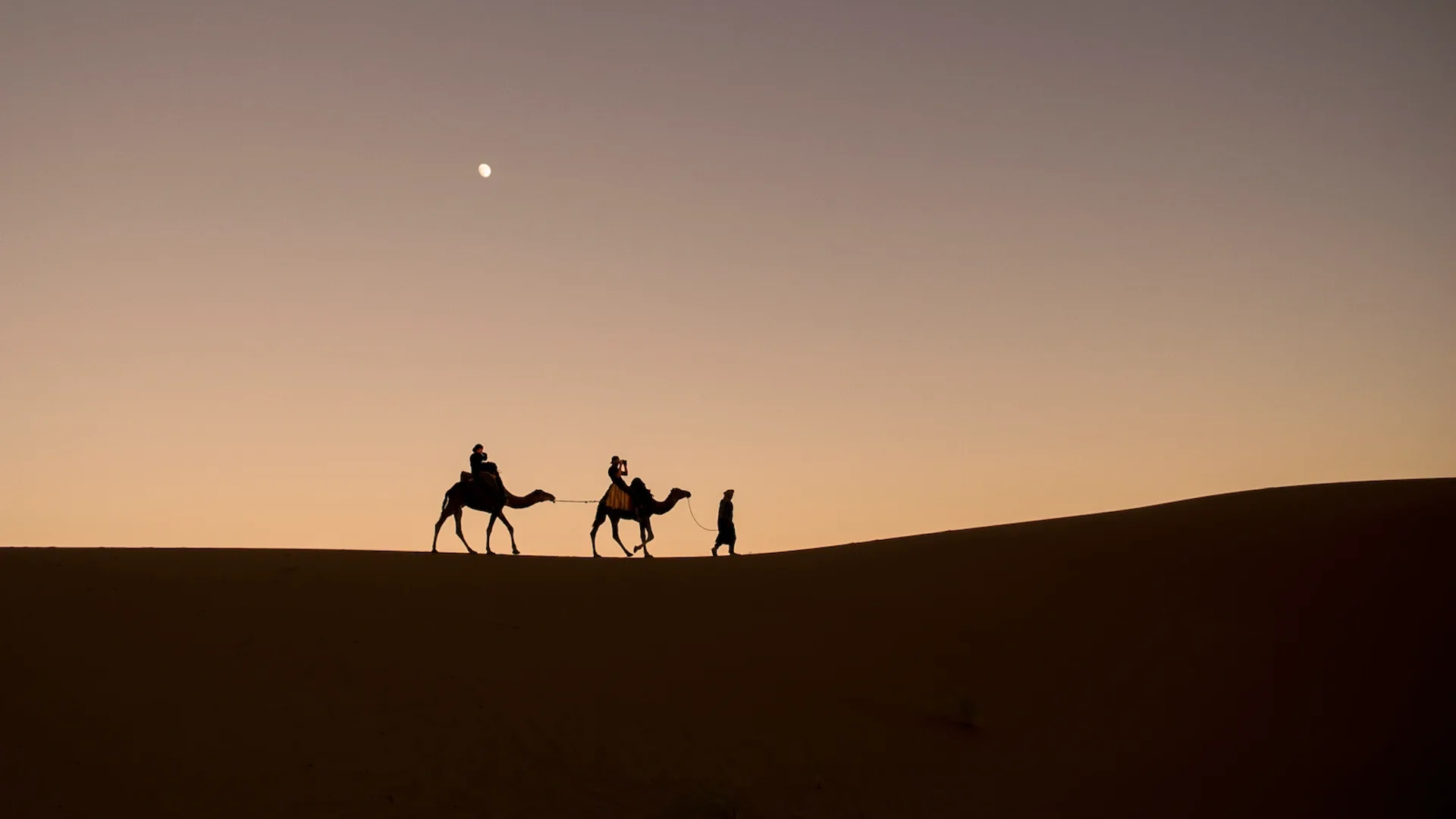
Day 2 — Dades to Erg Chebbi. Morning in the Todra Gorge, where the canyon narrows to a slot between 300 m walls and you can walk the riverbed among climbers and mule traffic. After lunch the landscape flattens into black hamada, and around Erfoud the first dunes appear on the horizon. You reach Merzouga in time to swap the vehicle for a camel and ride into the erg for sunset — read what a Merzouga camel trek is actually like before you go. Dinner, drumming and an absurdly starry sky at camp.
Day 3 — Sunrise and the return. Up before dawn to watch the dunes turn from grey to orange, breakfast at camp, then the long drive back to Marrakech, usually arriving between 19:00 and 20:00. On a 4-day version you break this leg with a night near Ouarzazate instead.
Want the desert without the guesswork? Send us your dates and group size on WhatsApp and we'll reply with a private itinerary and per-vehicle quote — free cancellation up to 24 hours before pickup. Start planning your Sahara tour.
When to go
October to November and March to April are the sweet spots: warm days, cool but comfortable nights, and reliable roads.
December to February brings crisp, clear days and superb light, but desert nights can drop close to freezing — camps provide heavy blankets, and you should pack proper layers. Be aware that the Tizi n'Tichka pass can close temporarily after snowfall between November and March; a good driver builds slack into the schedule and checks conditions the night before.
July and August are workable but demand respect: Merzouga sees extreme heat in the middle of the day, so everything shifts to early mornings and evenings, with air-conditioned driving and a long shaded break at midday.
If your dates fall during Ramadan — which moves about 11 days earlier each year — tours run normally, but expect a quieter daytime rhythm in towns along the route and a memorable buzz after sunset.
Private tour or group minibus?
The group option is cheap, and you get what you pay for: fixed departure times, a 15–17 seat minibus, photo stops decided by the clock and a shared camp. The private version means your own vehicle, your own driver, your own pace — leave earlier to beat the coaches to Aït Benhaddou, linger in the Todra Gorge, skip the souvenir stops entirely.
Our private Sahara tours from Marrakech start at 2,800 MAD per vehicle, with per-vehicle pricing for up to 9 guests — so a family or group of friends often pays less per person than a mid-range group tour, without sharing the vehicle with strangers. Booking direct comes with free cancellation up to 24 hours before pickup and WhatsApp support throughout the trip. If you would rather warm up with a day trip first, our Atlas Mountains tours cover the same first mountain stage as an easy single day, and a Marrakech day tour is the classic city primer before you head south.
What to pack
- Layers. Desert temperature swings of 20°C between noon and midnight are normal.
- A scarf or cheche for sun, wind and blowing sand — buy one in Merzouga for a few dirhams if you forget.
- A small overnight bag. Your main luggage stays locked in the vehicle; take only one night's kit to camp.
- Cash. Small notes for tips, drinks at camp and roadside stops; card machines are rare east of Ouarzazate.
- Power bank. Camp electricity is limited to a few evening hours.
- Closed shoes and warm socks from November to February — sand gets cold fast after sunset.
FAQ
Can you do Marrakech to the Sahara in 2 days?
Not to Merzouga — the 1,120 km round trip needs at least three days. Two-day "Sahara" tours from Marrakech go to Zagora, a stonier desert with much smaller dunes. If you only have two days, compare the options honestly in our Merzouga vs Agafay vs Zagora guide before deciding.
Is the drive safe?
Yes. The entire route is paved and well maintained, and professional drivers do it weekly. The Tizi n'Tichka is a proper mountain pass with switchbacks, so choose a rested driver over a rental car, and allow flexibility in winter when snow can close the pass for a few hours.
Do I have to ride a camel?
No. Every good camp offers a 4x4 transfer over the sand, and plenty of travellers ride one way and drive the other. See Camel Trekking in Merzouga: What to Expect for the honest picture.
How much does a Sahara desert tour from Marrakech cost?
Our private driver tours start at 2,800 MAD per vehicle for up to 9 guests. On top of that, budget for accommodation and the desert camp: standard dune camps typically run 350–700 MAD per person with dinner and breakfast, while luxury camps with private bathrooms range from roughly 1,500 to 3,500 MAD per person. Message us via our contact page for an exact quote for your dates.