Camel Trekking in Merzouga: What to Expect
Your first camel trek is equal parts magic and comedy: the lurching mount, the slow-motion sway, and then — as the caravan crests the first dune and Erg Chebbi opens up in gold — one of the best hours of your entire Morocco trip. Here is exactly what happens between the dune edge at Merzouga and your camp in the sand, with the honest details most tour pages skip.
How the trek actually works
You arrive in Merzouga in the late afternoon — usually the end of day one or two of a Sahara tour from Marrakech or a Fes to Marrakech desert crossing. At the dune edge, your driver hands you over to the camel team. Main luggage stays locked in the vehicle; you carry a small overnight bag.
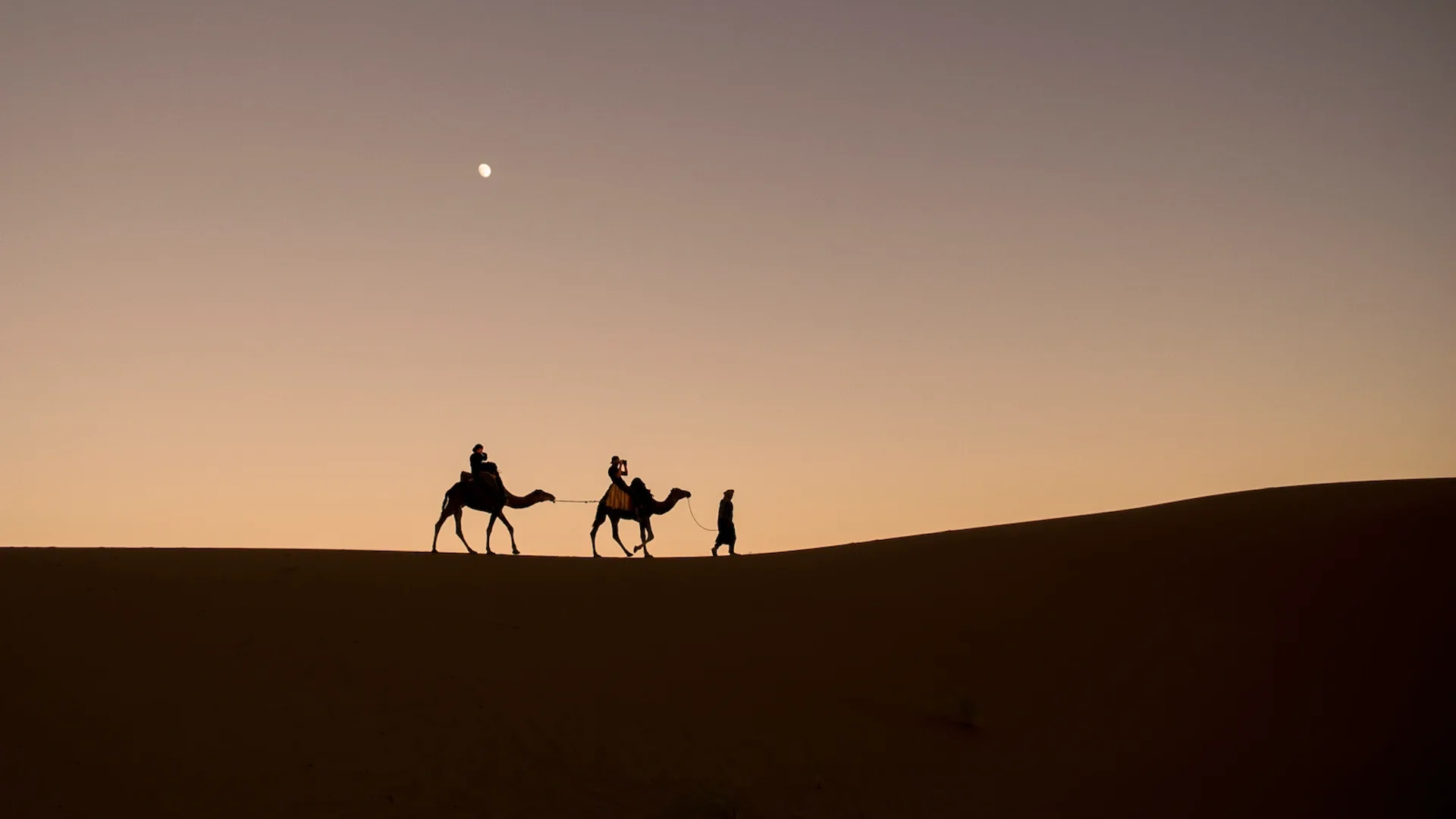
The caravan sets off 60–90 minutes before sunset. Camels are roped nose-to-tail in single file, each carrying one rider, while the handlers walk alongside on foot — you never steer anything. The ride into camp takes anywhere from 45 to 90 minutes depending on where your camp sits in the erg, timed so the dunes are doing their full orange-and-shadow performance as you go. The same happens in reverse after sunrise.
One myth to retire immediately: these are dromedaries — one hump — and that hump is where the padded saddle sits.
What riding a camel actually feels like
The mount is the moment everyone remembers. The camel stands back legs first, pitching you sharply forward, then front legs, snapping you back. The rule is simple: lean back and hold the T-bar. The handlers will tell you; believe them.
Once up, the motion is a slow figure-of-eight sway, more rocking boat than horse. Most people find it hypnotic within ten minutes. What nobody escapes is the saddle: after 45 minutes your inner thighs will file a complaint, and after 90 they will file a formal grievance. It is discomfort, not pain, and it evaporates at camp — but it is the reason good operators keep rides around an hour rather than selling multi-hour treks to first-timers.
Photography from the saddle is doable once you trust the rhythm — strap your camera, don't just hold it, and shoot the caravan's shadow on the dunes. It never misses.
What to wear and bring
- Long trousers, non-negotiable — bare skin against the saddle blanket chafes within minutes.
- A cheche (desert scarf) against sun, wind and blown sand; buy one in Merzouga for 30–80 MAD and have a handler show you the wrap.
- Closed shoes for the ride, though barefoot is the best way to climb dunes at camp.
- Layers. Even after a hot day, the desert sheds heat fast; December to February nights approach freezing.
- A small bag only — one night's essentials, power bank (camp electricity runs a few evening hours), toothbrush, torch.
- Small cash for tips and camp extras.
Planning a desert night? Our private Sahara desert tours start at 2,800 MAD per vehicle for up to 9 guests, camel trek and camp arranged to your budget — with free cancellation up to 24 hours before pickup and WhatsApp support the whole way. Message us to plan yours.
The camp: dinner, drums and the darkest sky you've seen
Camps range from simple berber setups with shared facilities to luxury tents with real beds and en-suite bathrooms; both put you inside the dunes, which is the point. Dinner is typically harira soup, tagine and fruit, followed by drumming round the fire — the handlers are usually the band — and then the main event: a sky with no light pollution for a hundred kilometres. Walk two dunes away from the lanterns, lie down, and give your eyes ten minutes. On a moonless night the Milky Way is not a faint smudge; it is architecture.
Sunrise, and the ride back
Someone will wake you in the dark — say yes. The climb up the big dune behind camp is a twenty-minute leg-burner in cold sand, and the payoff is the Sahara switching from ash-grey to apricot in real time. Breakfast follows at camp, then you ride (or walk beside the camels, which your thighs may vote for) back to the dune edge, where your driver is waiting with the vehicle warmed and the day's route loaded.
Who should skip the camel — and what to do instead
Nobody has to ride. Every good camp offers a 4x4 transfer across the sand, and mixing modes — camel in, vehicle out — is completely normal. Skip the saddle if you are pregnant, have significant back, hip or knee problems, or simply don't fancy it; small children usually ride from around age four or five, either sharing a saddle with a parent or led on their own camel at walking pace, at your judgement. Travellers with limited mobility should tell us in advance via our contact page so we can book a camp reachable by vehicle with firm paths at camp itself.
When to go
October to April is prime camel-trekking season: warm rides, cold-but-manageable nights. July and August bring extreme midday heat to Merzouga — treks still run because they happen at the day's cool edges, but the midday hours are strictly for shade and mint tea, and camps are quieter. Winter riders should pack proper warm layers and a hat: sunrise on a January dune is glorious and genuinely cold. Whichever month, the trek slots into any of the classic routes — compare them in our Merzouga vs Agafay vs Zagora guide or browse every format on the tours page.
FAQ
How long is the camel ride in Merzouga?
Typically 45–90 minutes each way, timed around sunset and sunrise. That is deliberately calibrated to maximise the scenery and stop before saddle-soreness turns serious. Longer multi-day treks exist for enthusiasts, but first-timers rarely wish the ride were longer.
Is camel trekking safe for children?
Generally yes from around four or five years old — camels walk at handler pace in single file, and kids can share a parent's saddle. Under-fours and anxious riders are better off with the 4x4 transfer, watching the caravan arrive from camp.
How much should I tip the camel handlers?
There is no obligation, but 20–50 MAD per person is a well-received norm for the handlers who lead the caravan, run the camp fire and haul your bag up a dune. Carry small notes; there are no card machines in Erg Chebbi.
Can I do the desert camp without riding a camel at all?
Yes — request the 4x4 transfer when booking and you'll bounce over the dunes to camp in fifteen minutes instead. You lose nothing of the camp, the stars or the sunrise, and you can still meet the camels on their terms: firmly on the ground.