Morocco in Winter: Sun, Snow and Empty Desert
Winter is Morocco's most underrated season. From November to February you get warm afternoon sun in Marrakech, real snow on the High Atlas and Sahara dunes with barely another footprint on them — while spring's crowds and prices are still months away. The trade-offs are short days, cold nights and one mountain pass that needs watching. Plan around those three things and winter quietly delivers the best-value Morocco trip of the year.
This guide covers the weather region by region, the winter Sahara, the Atlas snow question and how to shape an itinerary that works. Still weighing seasons? Read it alongside our guides to Morocco in spring and Morocco in autumn.
Winter weather, region by region
Morocco in winter is not one climate, and packing for "Morocco" rather than for each region is the most common mistake we see.
Marrakech and the inland cities are reliably pleasant by day — typically 18–22°C and sunny through December and January — then cold after dark, often dropping to 5–8°C. The Atlantic coast (Casablanca, Rabat, Essaouira) stays mild at 16–20°C, with more grey days and the occasional front blowing in off the ocean. The north is the wettest corner of the country: Tangier and Chefchaouen take much of their annual rainfall between November and February, and the blue medina is at its most photogenic in the washed light between showers. The High Atlas gets genuine snowfall above roughly 2,000 metres. The Sahara around Merzouga is the surprise: dry, clear and around 18–20°C at midday, falling to near freezing overnight.
The practical upshot: base your days inland or in the desert for sun, treat the far north as a between-showers destination, and carry layers everywhere. A private day tour works especially well in winter because the vehicle carries the fleece you shed by 11am — our Marrakech private tours start at 2,500 MAD per vehicle, for up to nine guests.
The Sahara with the dunes to yourself
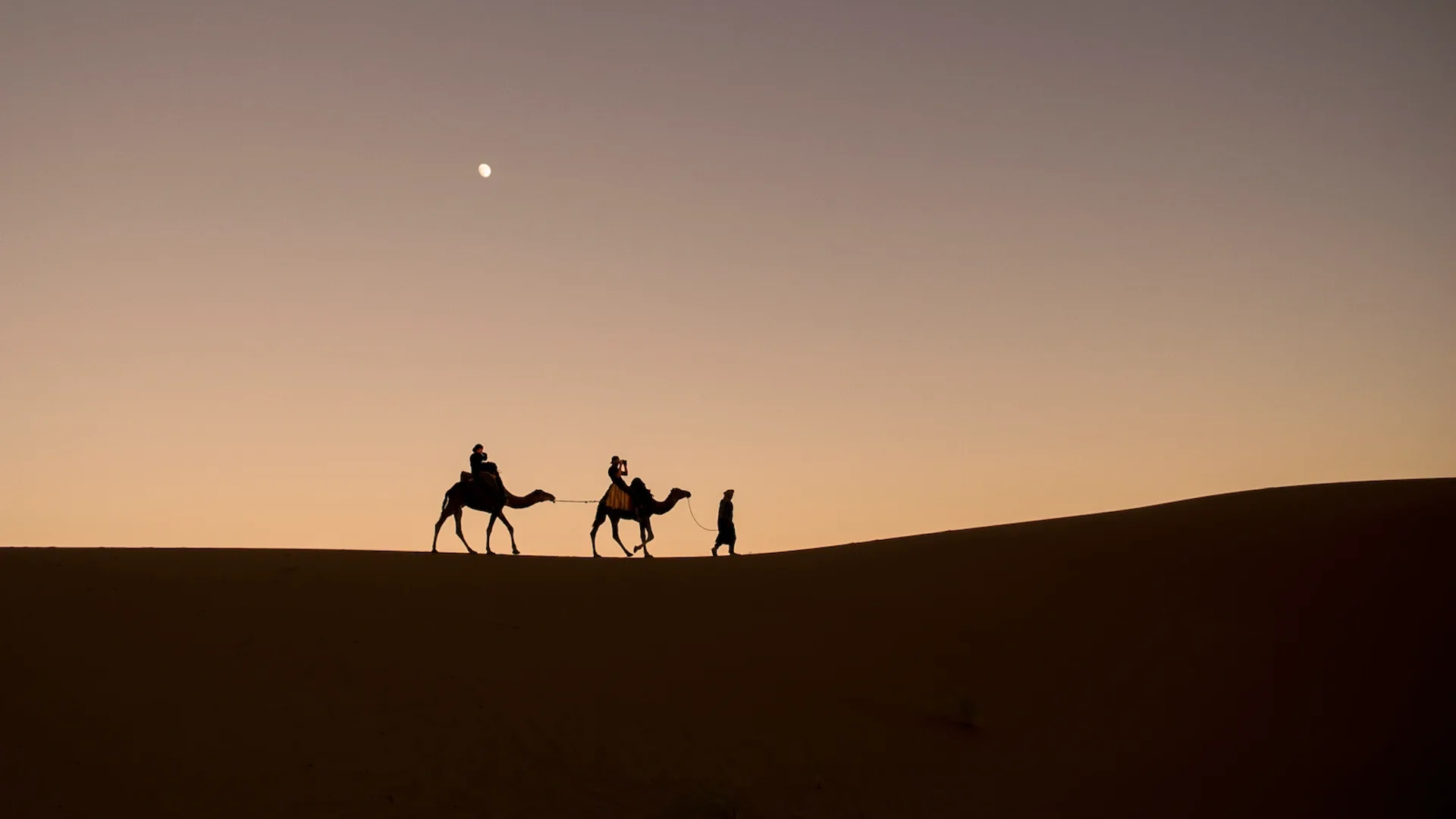
Between December and February, the Erg Chebbi dunes near Merzouga see a fraction of their spring visitors. Days are made for camel treks and 4x4 exploring — around 20°C under a hard blue sky — and the dry winter air produces the sharpest starscapes of the year. Nights are the price: camp temperatures can touch zero, so a camp with proper bedding and a stove matters more now than in any other season. The reward is sunrise over dunes with no queue for the ridgeline.
Getting there is a two-day journey each way from Marrakech, and it is worth doing slowly: the kasbah at Aït Benhaddou, the Todra and Dades gorges, and palm-filled valleys line the route. Ouarzazate makes the natural overnight break, and our Sahara Merzouga private tours start at 2,800 MAD per vehicle — one private vehicle, your own pace, no strangers on your itinerary.
Snow on the Atlas — and the road that closes
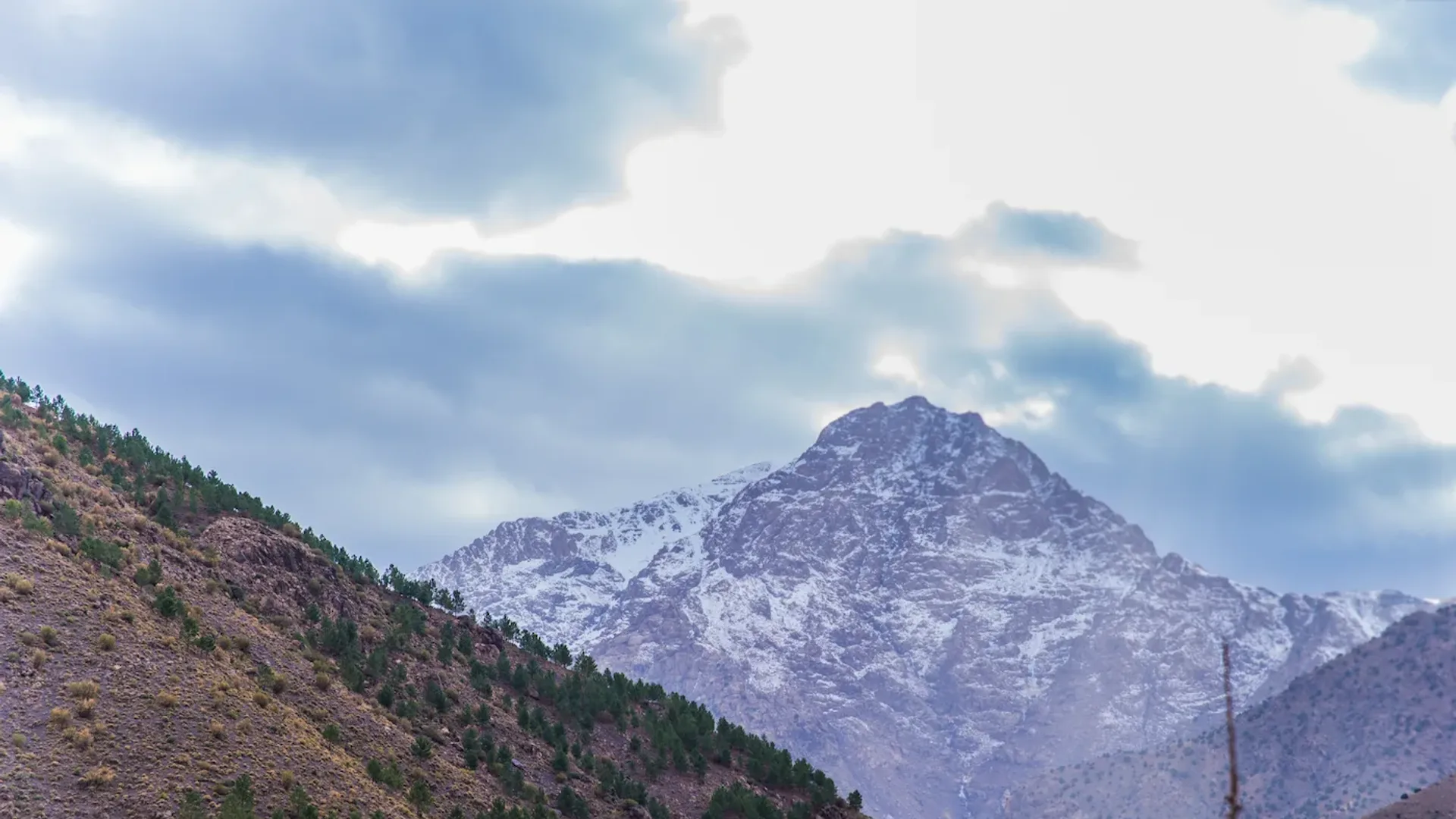
The High Atlas in winter feels like a different country: snow-capped ridgelines little more than an hour from Marrakech's orange trees. Day trips into the Atlas mountains run all winter — Berber villages, valley walks and mint tea with the snowline filling the window — and start at 2,600 MAD per vehicle.
Two cautions. First, the Tizi n'Tichka pass — the main road between Marrakech and Ouarzazate, cresting at 2,260 metres — can close temporarily after snowfall between November and March. Closures usually lift within hours once the ploughs pass, but if the desert is the centrepiece of your trip, build in a buffer day rather than booking the crossing flight-tight. Your driver checks conditions each morning and we re-time or re-route when needed. Second, winter ascents of Mount Toubkal are proper mountaineering — crampons, ice axe, hard weather — and a licensed mountain guide is required for the trek in any season. For most travellers, the villages and viewpoints deliver the snow without the risk. When cover is good there is even skiing at Oukaïmeden, one of Africa's few pistes.
Planning a winter trip? Message us on WhatsApp with your dates and group size and we'll send a private day-by-day plan within 24 hours — per-vehicle pricing, book direct, and free cancellation up to 24 hours before pickup on driver tours. Start the conversation.
Cities at their calmest
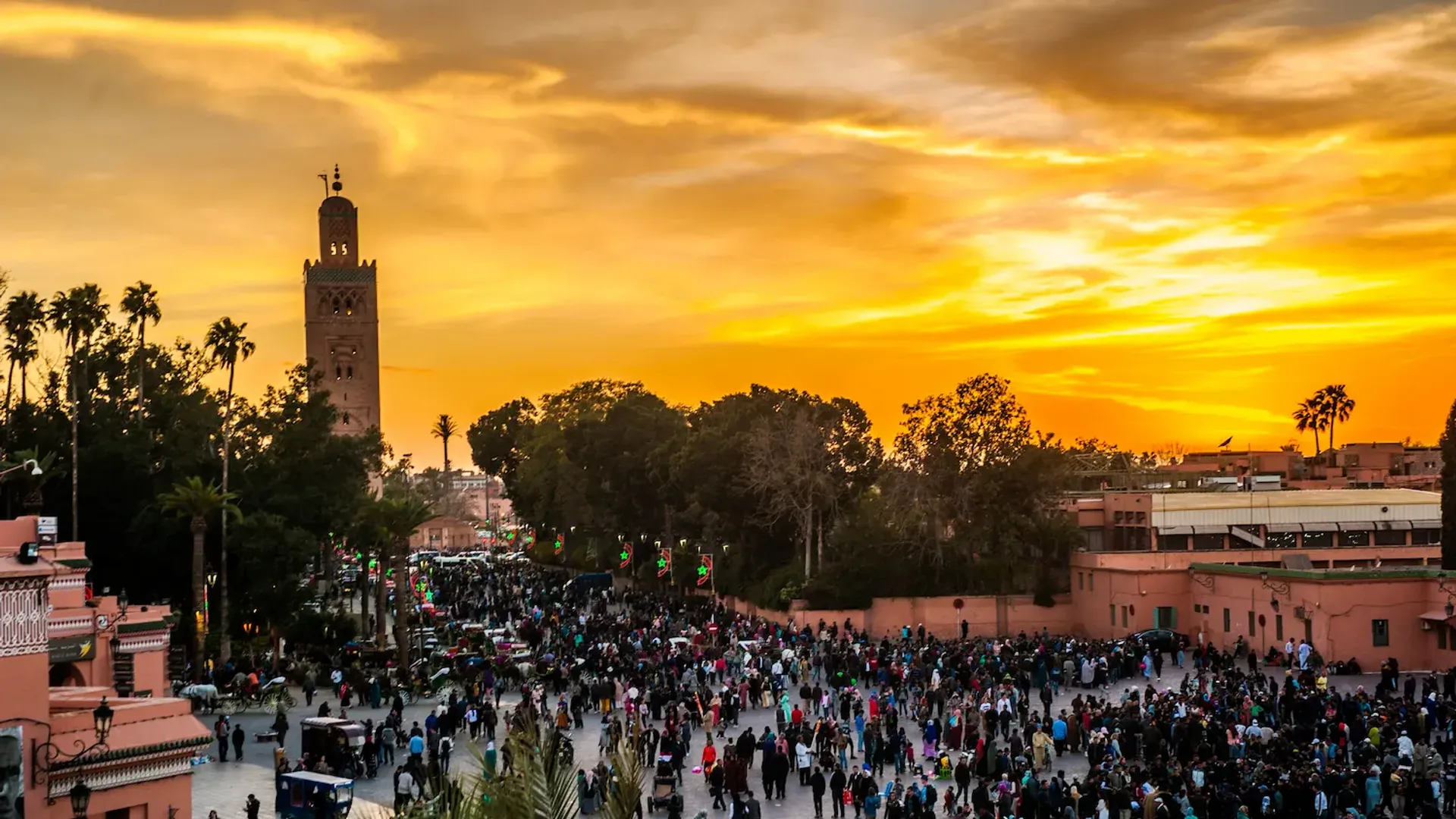
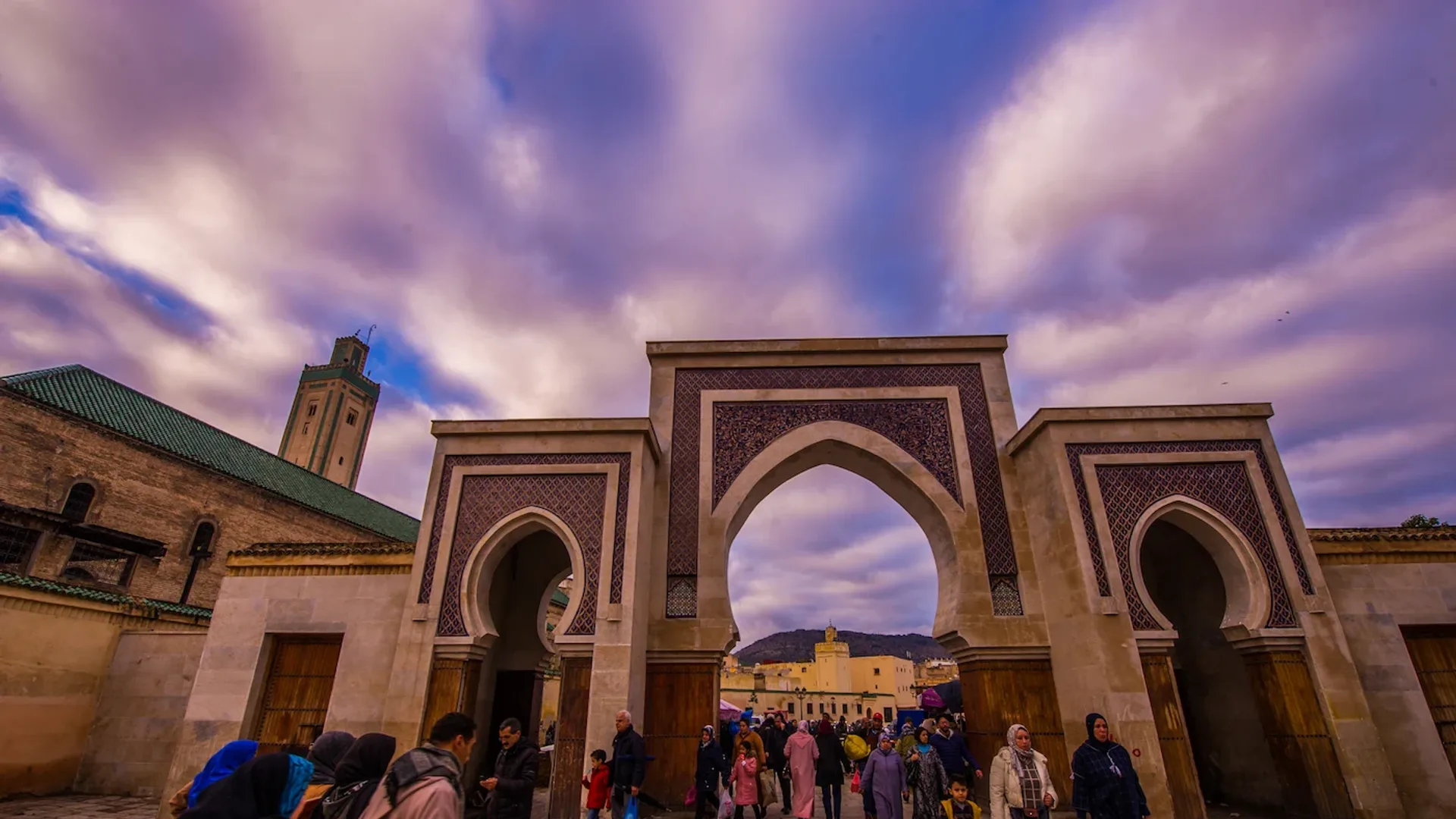
Winter is when the medinas belong to the people who live in them. Marrakech's souks are navigable, restaurant terraces have space in the midday sun, and Jemaa el-Fnaa still comes alive at dusk — arrive around 5pm as the food stalls fire up and the light turns gold. Note that souks across Morocco run quiet around Friday midday prayers; that is the window for a long lunch or a museum.
Two calendar caveats. The Christmas–New Year fortnight is a genuine mini-peak, with Marrakech riads and desert camps booking out weeks ahead. January and early February, by contrast, are the emptiest, best-value weeks of the whole year. Days are also short — sunset comes before 6pm in December — so start at 9am rather than drifting out mid-morning.
What to pack (and the riad problem)
The most useful winter fact nobody mentions: traditional riads were built to shed heat, not hold it. Many older houses rely on portable heaters and thick blankets rather than central heating, so evenings indoors can feel colder than evenings out. Ask specifically about heating when you book a riad — or ask us on WhatsApp; we know which ones stay warm.
Packing is simply layering: T-shirt weather at 2pm, jacket weather at 8pm, near-freezing overnight in the desert. Add a warm hat for the camp night, a rain shell for the coast and the north, and sunglasses everywhere — winter light is low and hard.
A winter itinerary that works
A shape that uses the season well: two or three days in Marrakech with an Atlas day trip, the two-day run east to Merzouga for the empty dunes, then a finish on the mild Atlantic at Essaouira. City walking tours are arguably at their best in winter too — cool air, clear light, no crowd-shuffle — each led by a licensed local guide; our walking tours start at 900 MAD for one to four guests. Leave Chefchaouen and the far north for a drier season unless you enjoy dramatic skies between showers.
Frequently asked questions
Is Morocco warm in winter?
By day, yes. Marrakech typically reaches 18–22°C with strong sunshine from December to February, and the Sahara sits around 20°C at midday. Nights are genuinely cold everywhere — 5–8°C in the cities and near freezing in the desert — so pack layers, not just summer clothes.
Can you visit the Sahara in December or January?
Yes, and it is one of the best windows of the year: clear days, comfortable trekking temperatures and far fewer visitors. Choose a camp with proper bedding and a stove for the cold nights, and allow a buffer day in case snow briefly closes the Tizi n'Tichka pass.
Does it snow in Morocco?
Regularly — above about 2,000 metres in the High and Middle Atlas from November to March. Marrakech itself stays snow-free; the classic winter view is standing among the city's orange trees with white peaks filling the horizon.
Is Christmas busy in Morocco?
The Christmas–New Year fortnight is a mini high season, especially in Marrakech and the desert camps, so book several weeks ahead. Early December, January and February are among the quietest and best-value weeks of the year.