Morocco vs Egypt: Which Should You Visit?
Morocco and Egypt sit at the top of most North Africa shortlists, and they are genuinely different trips. One is built around living cities, mountains, coast and desert; the other around ancient monuments and the Nile. Here is an honest comparison — sights, food, costs, logistics and seasons — so you can pick the right country for the trip you actually want.
We run private tours in Morocco, so we know one side of this comparison far better than the other. We have tried to be fair anyway, and where Egypt clearly wins, we say so.
The short answer
Choose Egypt if ancient history is the point of the trip. Nothing in Morocco — nothing almost anywhere — competes with Giza, Karnak and the Valley of the Kings for sheer antiquity and scale. If you have wanted to stand in front of the pyramids since childhood, no amount of Marrakech atmosphere will substitute.
Choose Morocco if you want variety in a compact space. Medieval medinas, the High Atlas, Atlantic surf towns and Sahara dunes all fit inside a single one- or two-week loop. Distances are shorter, the food scene is stronger, and travelling privately at your own pace is easier to arrange.
Combining both in one short holiday rarely works well: separate flights, separate currencies, separate rhythms. Treat them as two trips and do each one properly.
Sights and landscapes
Egypt's headline sights are archaeological and concentrated along the Nile corridor: the Giza plateau and the Grand Egyptian Museum near Cairo, then Luxor's temples and tombs, Aswan and Abu Simbel further south, with the Red Sea resorts off to one side. A Nile cruise strings the highlights together neatly. It is a checklist trip in the best sense — the monuments really are that good.
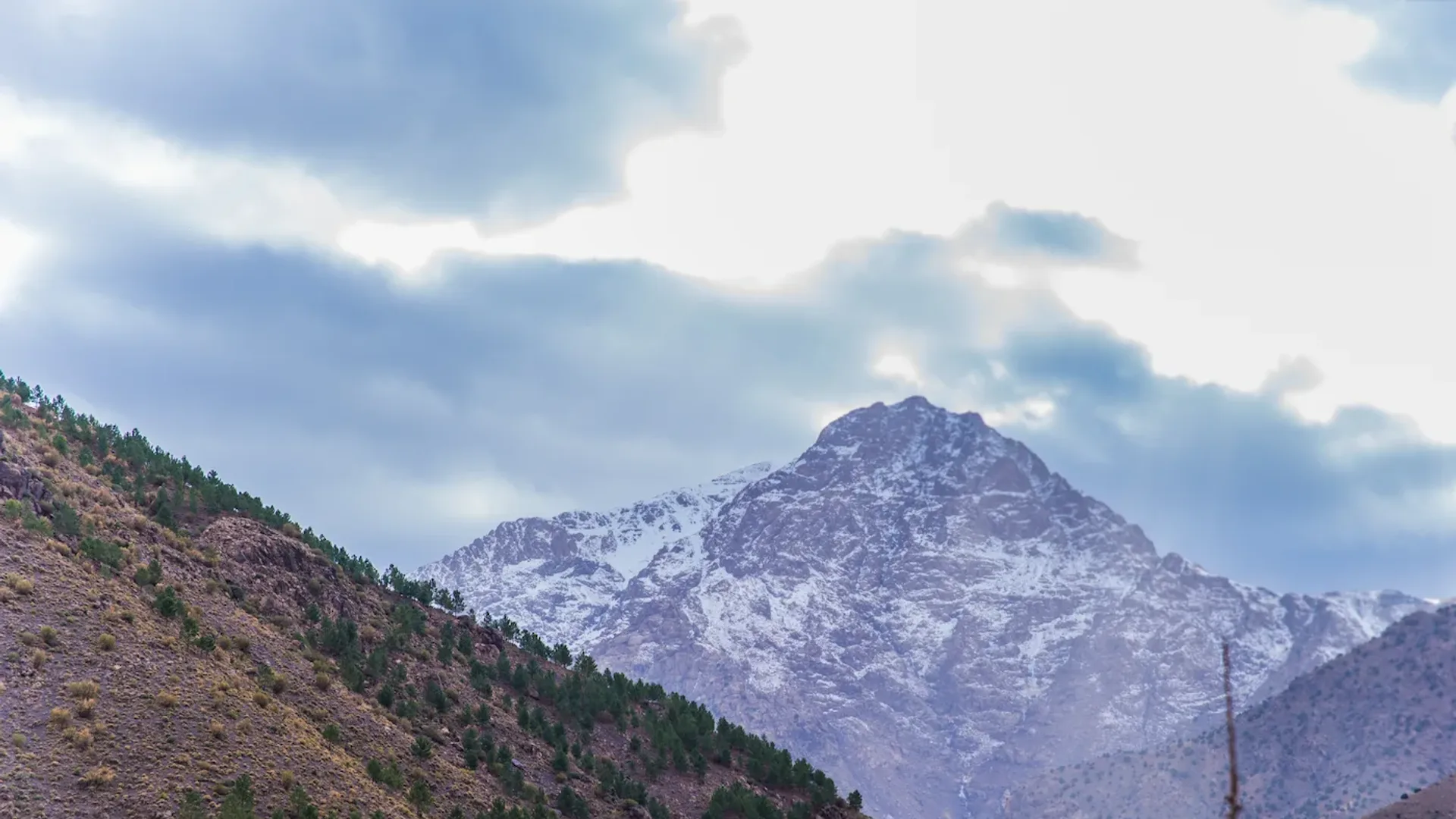
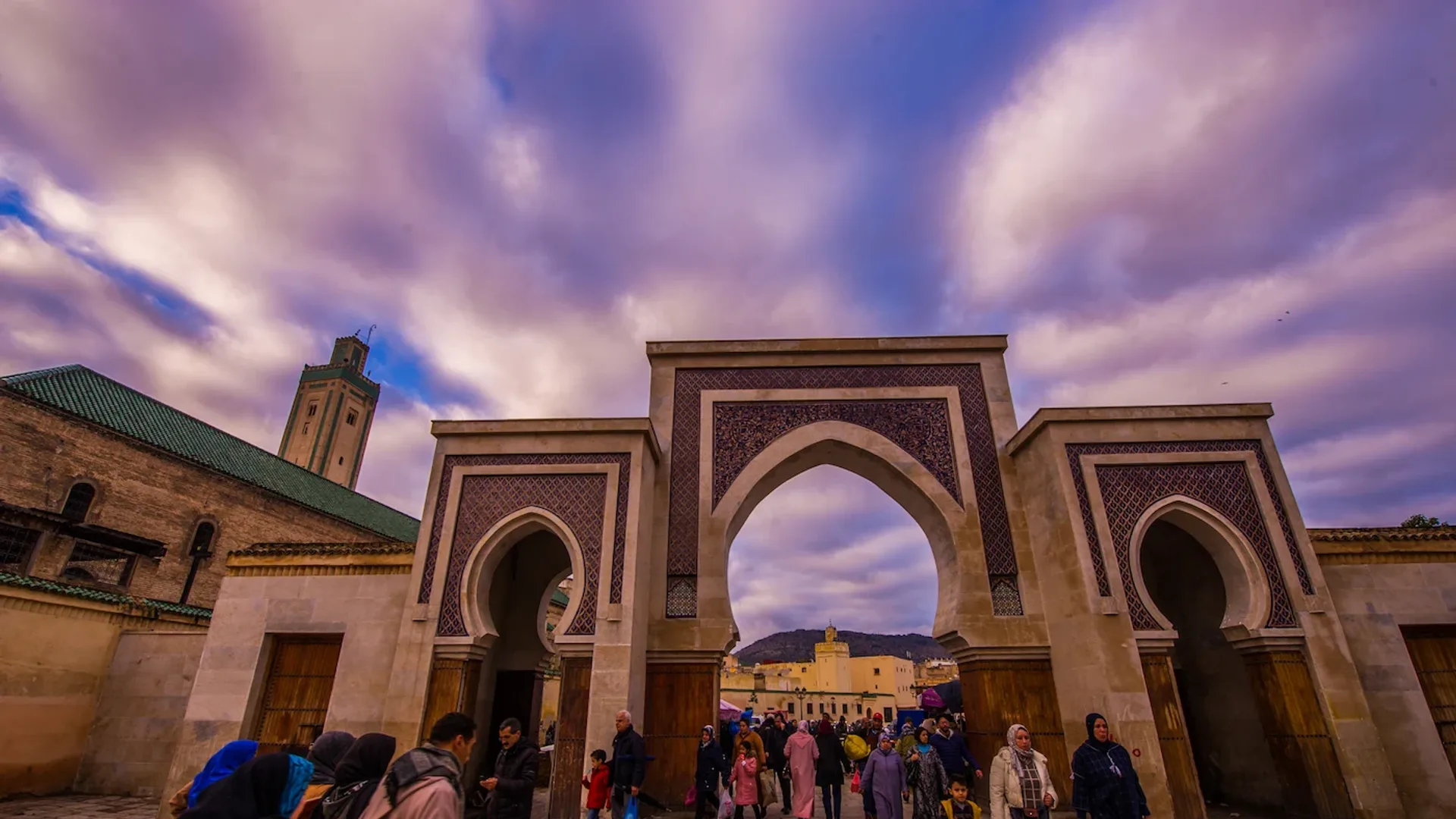
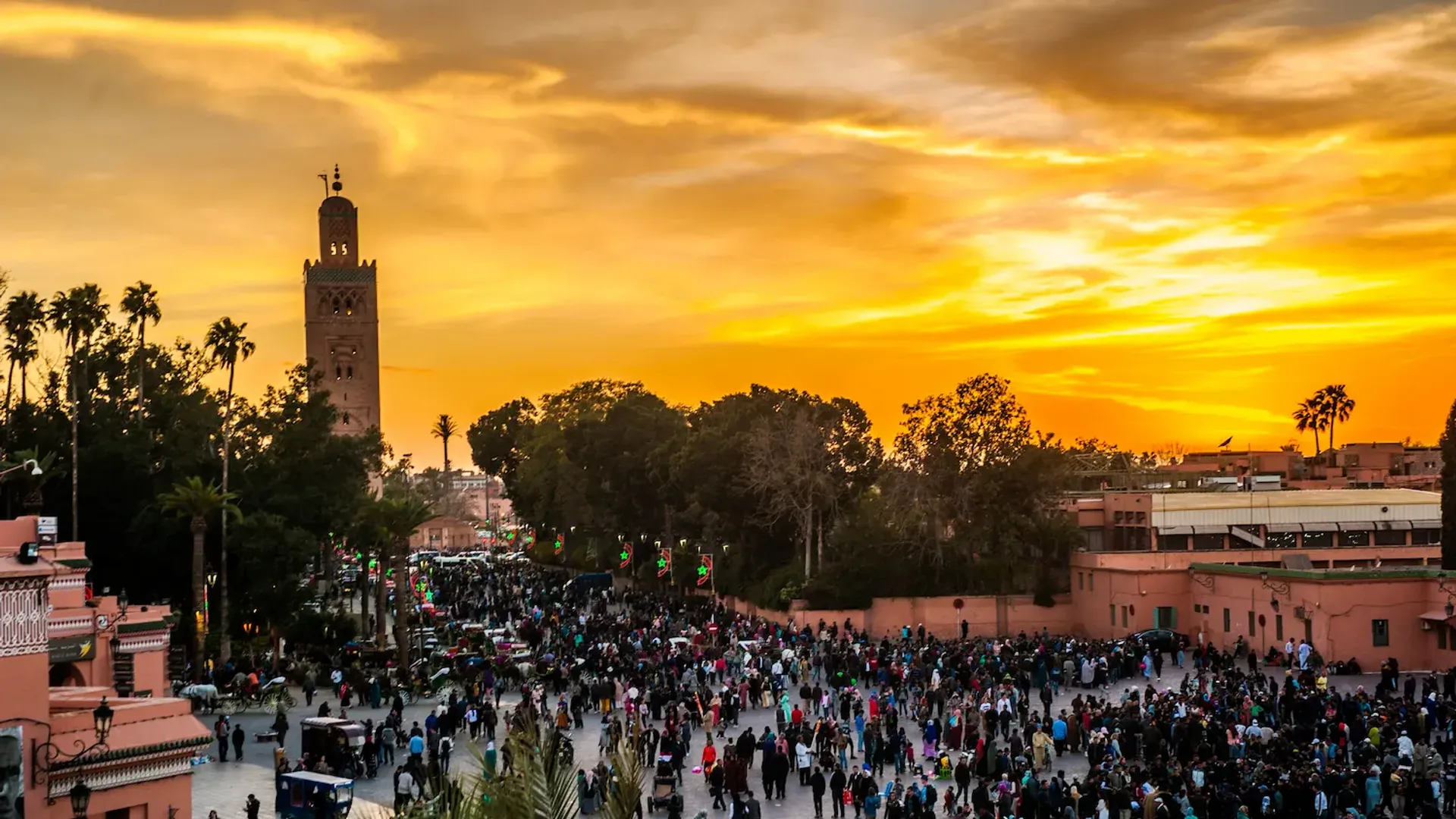
Morocco's sights are mostly alive rather than excavated. Jemaa el-Fnaa in Marrakech comes alive at dusk, when the square fills with food stalls, musicians and storytellers — arrive at 15:00 and you will wonder what the fuss is about. The Fes medina is a functioning medieval city of nine thousand alleys, where the Chouara tannery is best seen in the morning while the dye pits are busy. Beyond the cities you get Chefchaouen's blue lanes, the Tizi n'Tichka pass over the Atlas towards the kasbahs of the south, and the Erg Chebbi dunes on our Sahara tours from Merzouga. One planning note for Casablanca: the Hassan II Mosque is one of the very few Moroccan mosques non-Muslims can enter, and only on the official guided tour slots — you cannot simply walk in.
Food
Morocco wins this category for most travellers. Tagines, couscous (traditionally served on Fridays), grilled meats, fresh Atlantic seafood, olives, msemen and mint tea — and the best of it is cheap. One myth to clear up: there are no Michelin-starred restaurants in Morocco. The memorable meals happen in family-run places, market stalls and riad kitchens, not white-tablecloth rooms. Vegetarians eat well here too, which is not always true in Egypt.
Egyptian food — koshary, ful, taameya, grilled fish in Alexandria — is honest and satisfying, but few visitors leave calling it a highlight the way they do in Morocco.
Costs on the ground
Both countries are affordable by European or North American standards. Egypt is slightly cheaper day-to-day for food and local transport, but its entrance fees stack up quickly — the big Luxor sites, extra tombs and photo passes add a meaningful line to the budget. Morocco's entrance fees are modest, and its mid-range sweet spot is exceptional: a beautiful medina riad with breakfast often costs less than a bland chain hotel elsewhere. We break down real numbers in our Morocco vacation costs and budgets guide.
Getting around
Egypt involves long distances: Cairo to Luxor is an internal flight or a sleeper train, and most itineraries lean on a cruise or flights to work. Morocco is far more compact. Comfortable trains link Tangier, Rabat, Casablanca, Fes and Marrakech — including the Al Boraq high-speed line — and the mountain and desert legs are easily handled with a private driver. Our driver days are priced per vehicle for up to nine guests; a private day in Marrakech starts from 2,500 MAD per vehicle.
One Morocco-specific caveat: the Tizi n'Tichka pass can close after snow between November and March. A private driver checks conditions and re-times or reroutes the same morning; a fixed coach itinerary just cancels.
Weighing up Morocco? Send us a WhatsApp message with your dates and interests and we'll sketch a private itinerary within 24 hours — book direct, with free cancellation up to 24 hours before driver tours. Start planning
Seasons and weather
Morocco is at its best in spring (March–May) and autumn (September–November). The Atlantic coast stays mild year-round, which keeps Essaouira and Agadir pleasant even in August, but Merzouga sees extreme heat at midday in July and August — desert trips then need to be built around dawn and dusk. Egypt's ideal window is October to April; summer in Luxor and Aswan is genuinely punishing.
Both are Muslim countries, so Ramadan affects both. It shifts roughly 11 days earlier each year, so check the dates for your travel year. Tourism runs normally, but daytime rhythms slow and evenings get livelier.
Hassle, safety and comfort
Both countries are statistically safe for visitors, with the usual big-city precautions. The difference is texture. Egypt's vendor pressure and baksheesh culture around the major monuments is more relentless than anything in Morocco. Marrakech's souks keep you on your toes — expect invitations, offers of directions and the occasional unofficial 'guide' — but a smile and a firm 'la, shukran' (no, thank you) settles most of it. Fes, Chefchaouen and the coastal towns are gentler still. Solo travellers, including women, manage both countries well with modest dress and normal awareness.
Verdict: who should pick which
Pick Egypt if archaeology is the trip: the pyramids, the tombs, the temples. Pick Morocco if you want a varied trip — souks in the morning, mountains in the afternoon, dunes by the weekend — with better food, shorter drives and easy private travel. For families, honeymooners, photographers and food-focused travellers, Morocco is usually the stronger match; it is also the gentler first taste of North Africa. If Morocco is calling, our first-timer essentials guide covers the practical side, and you can browse every route on our tours page.
Frequently asked questions
Is Morocco or Egypt cheaper?
They are close. Egypt edges it on day-to-day food and local transport, while Morocco wins on mid-range accommodation value and lower entrance fees. Over a typical 10-day trip the totals usually land within a similar range — the bigger cost variable is your hotel standard, not the country.
Is Morocco or Egypt better for families?
Morocco, in most cases. Distances are shorter, the mix of beaches, mountains, kasbahs and camel rides keeps children engaged, and private per-vehicle touring means naps and snack stops on your own schedule. Egypt's long transfers and heat demand more of younger children.
Can I combine Morocco and Egypt in one trip?
Only with three weeks or more. There are few convenient direct flights, and each country deserves 8–12 days on its own. Most travellers who try to squeeze both into two weeks end up rushing the exact sights they came for.
How many days do you need in each country?
Egypt works in 7–10 days (Cairo plus a Nile itinerary). Morocco rewards 7 days for one region — say Marrakech, the Atlas and the coast — or 10–14 days for the classic loop including Fes and the Sahara.