
Zagora sits at the southern end of the Drâa valley, roughly 360 kilometres and a scenic seven-hour drive south of Marrakech over the Tizi n'Tichka pass. The town itself is a low, sun-baked frontier settlement famous for a hand-painted sign at its edge — a camel, an arrow, and the words "Timbouctou 52 jours" — a reminder that this was for centuries the launching point for camel caravans crossing the Sahara to the Niger river. Around it stretch date-palm groves fed by the Drâa, one of Morocco's longest rivers.
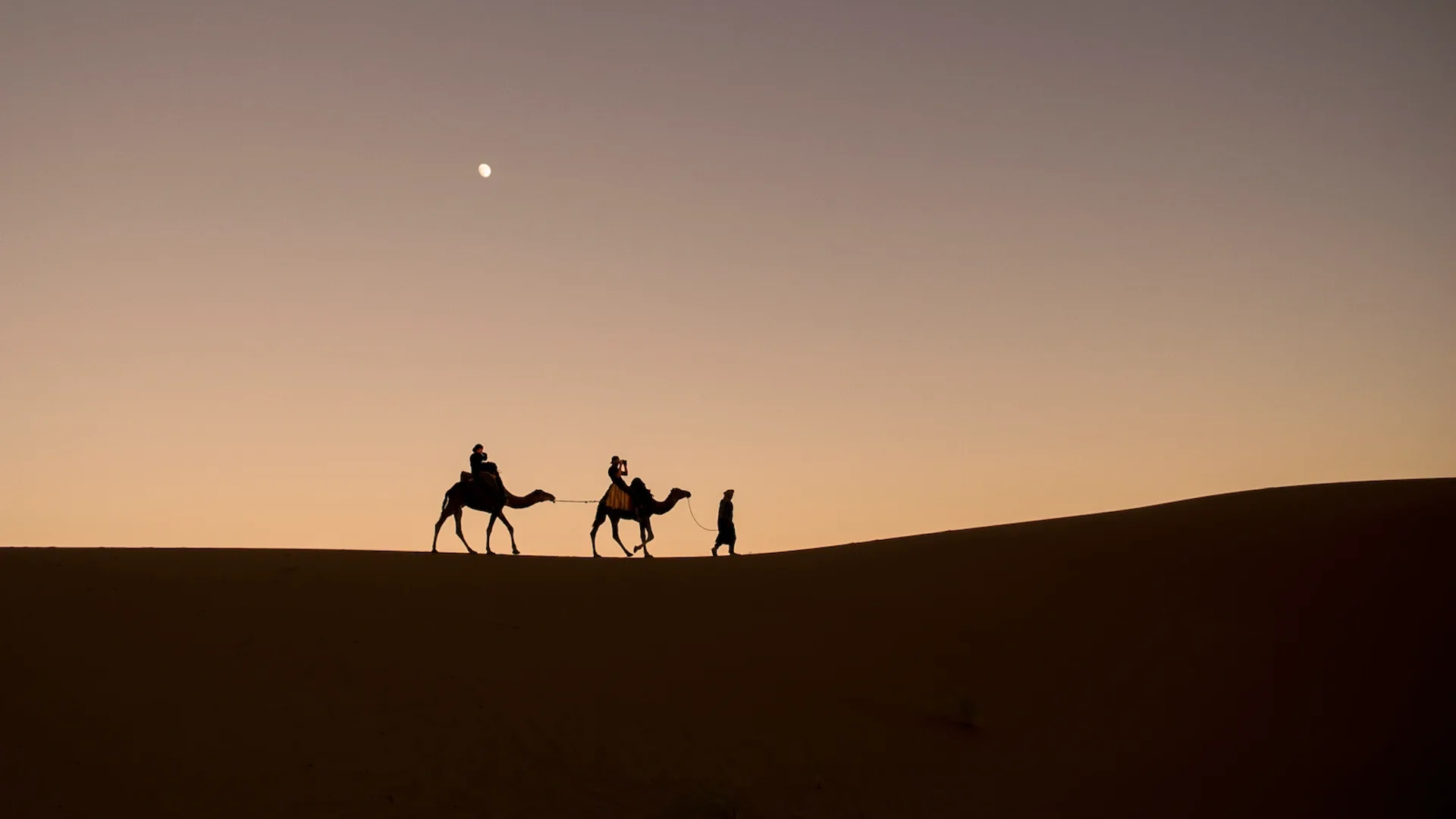
Outside town the desert begins quickly. The small dune field of Erg Lihoudi ("dune of the Jews", after the Jewish community once settled nearby) and the larger Erg Chegaga further south offer camel rides, 4×4 excursions and overnight bivouacs in Bedouin-style camps. The dunes are lower and less continuous than Erg Chebbi at Merzouga, but the payoff is proximity: you can leave Marrakech in the morning, sleep under Saharan stars the same night, and be back in the city the next evening.
Because the road down through the Drâa is long, winding, and best broken into stages, a private driver is the natural choice. Your driver handles the mountain crossing, the long river-valley run, and the unpaved piste out to the camp, then reverses the same journey — often with side stops at ksars, Amazigh markets, or the Tamegroute pottery kilns and library on the way back.
Highlights
- The famous "Timbouctou 52 jours" caravan sign at the town's edge
- Camel rides and dune walks at Erg Lihoudi outside town
- Overnight bivouacs at Erg Chegaga, deeper into the Sahara
- Long date-palm groves along the Drâa, Morocco's great southern river
- A shorter, faster desert overnight than the drive to Merzouga
- Side stops at Tamegroute's green pottery kilns and old Quranic library
Best Time to Visit
October to April for cool days and mild evenings in camp; avoid July and August when the Drâa valley routinely tops 45 °C.