Fes to Marrakech Desert Tour: Route Guide
If you need to travel between Fes and Marrakech anyway, the smartest move in Morocco is to do it through the Sahara. A Fes to Marrakech desert tour turns a seven-hour transfer into three of the best days of your trip: cedar forests, the Ziz Valley oasis, a night in the dunes at Merzouga, then the gorges and kasbahs of the south on the way to Marrakech. No backtracking, no wasted day.
Why cross the country through the desert
The direct options between the two imperial cities are a roughly seven-hour train ride via the coast, a similar bus journey, or a short flight. All of them skip everything in between — and "everything in between" happens to include Morocco's most spectacular landscapes. Because Merzouga sits between Fes and Marrakech (closer to Fes, in fact), routing through the desert costs you no extra distance in backtracking. You simply trade one dull transfer day for a three-day traverse of the Middle Atlas, the Sahara and the High Atlas.
It is also the single most efficient way to structure a one-to-two-week Morocco itinerary: fly into one city, out of the other, and let the desert stitch them together.
The route, leg by leg
Day 1 — Fes to Merzouga (~470 km, about 7 hours' driving plus stops). You climb quickly out of Fes into the Middle Atlas, passing Ifrane — the alpine-style town Moroccans call their Switzerland — and the cedar forest at Azrou, where Barbary macaques loiter by the roadside (keep snacks zipped away; they are professional thieves). Lunch in Midelt, the apple town between the two Atlas ranges, then the road drops through the Tizi n'Talghomt pass into the Ziz Valley: a ribbon of a million palm trees threading between ochre cliffs, with a viewpoint that no photograph does justice. By late afternoon you reach Merzouga, swap the vehicle for a camel, and ride into Erg Chebbi for sunset. Dinner and drums at camp under a heavy spill of stars.
Day 2 — Merzouga to the Dades Valley (~250 km). Sunrise from the dunes, breakfast, and back out of the sand. Stop in Rissani, the old caravan terminus, if the souk is running, then head west to the Todra Gorge for a walk between its 300 m canyon walls. Night in a guesthouse in the Dades Valley.
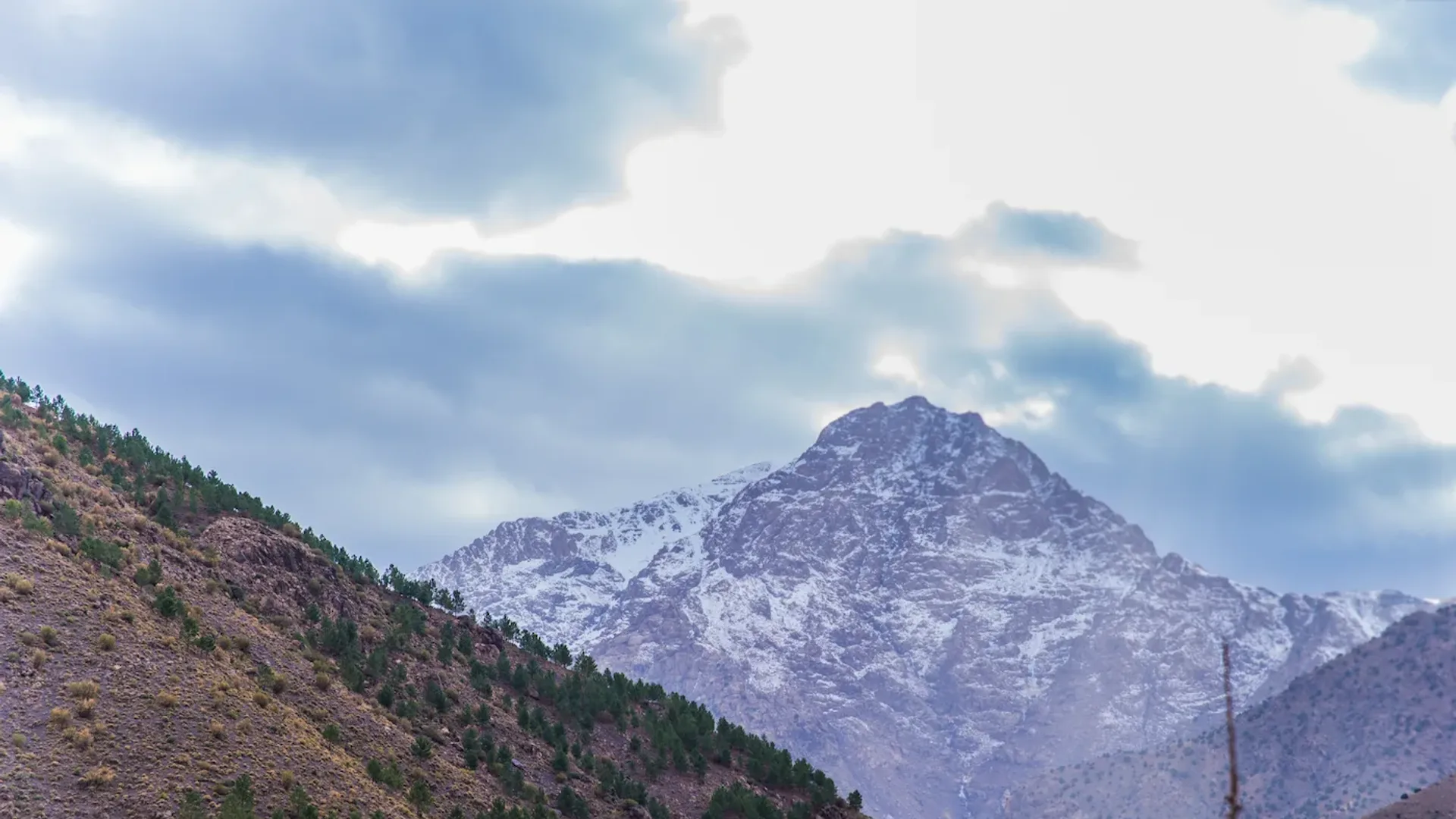
Day 3 — Dades to Marrakech (~330 km, about 6.5 hours' driving plus stops). West through the Rose Valley and the Skoura palm grove to Ouarzazate, then the essential stop: Aït Benhaddou, the UNESCO-listed ksar of packed-earth towers. From there you climb the Tizi n'Tichka pass (2,260 m) and descend to Marrakech by early evening.
One-way desert tours are our speciality. Tell us your Fes hotel and your Marrakech arrival date on WhatsApp and we'll send a private day-by-day plan with a per-vehicle price — free cancellation up to 24 hours before pickup. Get your route planned.
Three days or four?
The three-day version above is the standard and it flows well, because the longest driving day comes first while everyone is fresh. A fourth day is worth it if you want more than a photo stop at the highlights: split day three with a night in Ouarzazate or beside Aït Benhaddou itself, and you gain time for Atlas Studios, the Taourirt kasbah, or simply a slow morning. Travellers who hate long car days should treat four days as the real minimum.
Running the route in reverse? The same logic applies the other way — see our Marrakech to Sahara desert tour guide for the westbound version.
Before you leave Fes
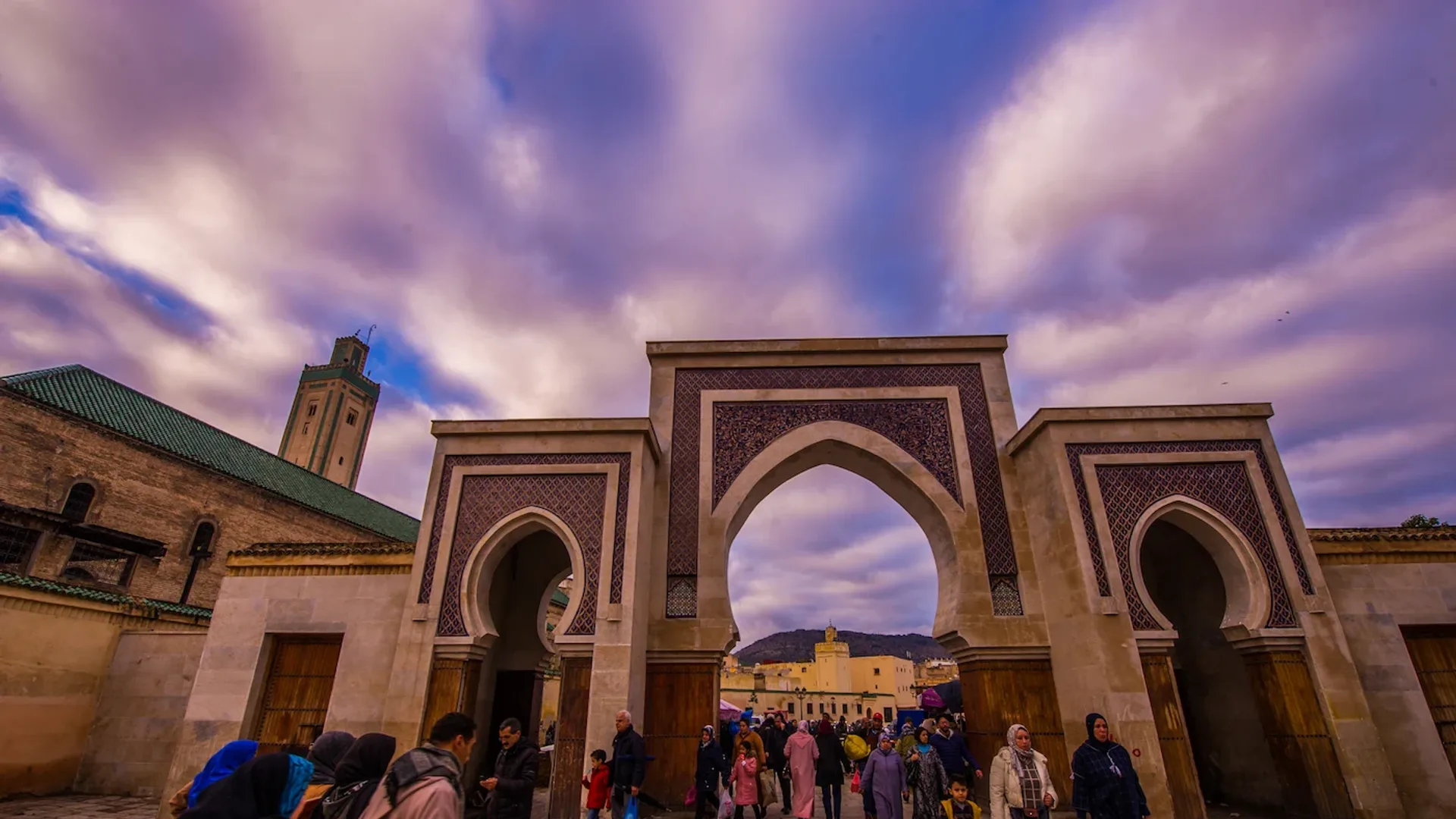
Don't ghost Fes on arrival day just to rush south. The medina deserves a full day, and two details are worth planning around: the Chouara tannery is at its best in the morning, when the dye pits are in full use and the light drops into the courtyard; and the souks go quiet around Friday midday prayers, so plan accordingly. Our Fes medina walking tours with a licensed local guide start at 900 MAD for 1–4 guests (1,200 MAD for 5–8, 1,500 MAD for 9–13), with free cancellation up to 48 hours. Prefer wheels? Our Fes private driver tours start at 2,500 MAD per vehicle and cover the panoramic viewpoints, the potteries and Meknes-side excursions.
When to travel this route
Spring (March–April) and autumn (October–November) are ideal across every stage. In July and August the Merzouga leg turns seriously hot at midday — the itinerary still works because the camel trek runs at sunset and sunrise, but choose a camp with shade and take the middle of day one gently. From November to March, snow occasionally closes the Tizi n'Tichka pass above Marrakech for a few hours; drivers monitor it daily, and a four-day plan absorbs any delay painlessly. During Ramadan (about 11 days earlier each year) everything runs, just with a slower daytime pulse in the towns en route.
Booking it as a private tour
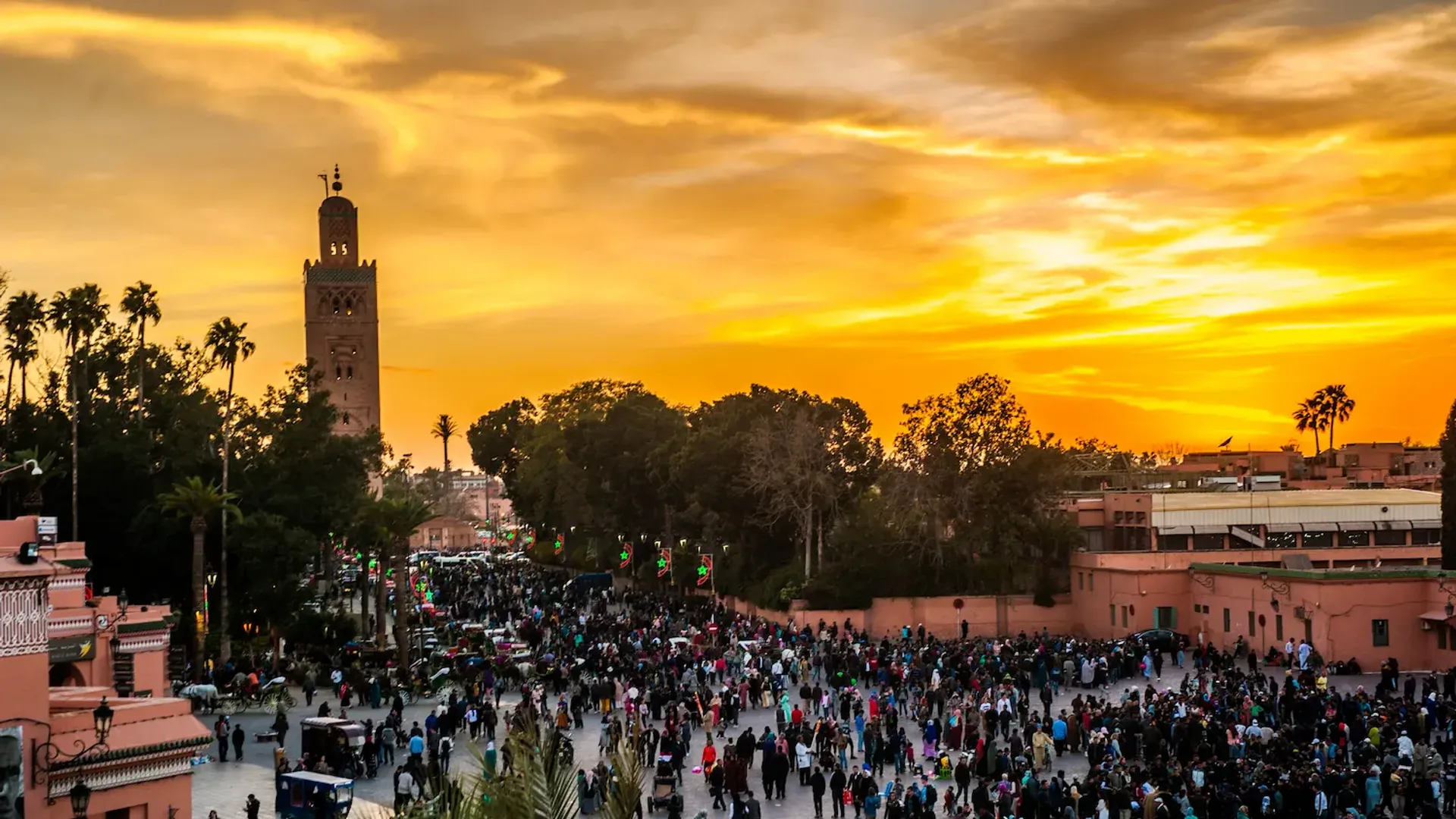
A private one-way tour means one vehicle and one driver for your group from your Fes riad to your Marrakech riad, with per-vehicle pricing for up to 9 guests — usually cheaper per person than two group-tour seats once there are three or more of you, and infinitely more flexible. Our Sahara desert tours start at 2,800 MAD per vehicle; the desert camp is booked to your budget, from simple berber camps to luxury tents with en-suite bathrooms. Finish the traverse with a Marrakech private tour once you arrive — after three days of canyons and dunes, Jemaa el-Fnaa at dusk is the right kind of culture shock.
FAQ
Is there a direct train from Fes to Marrakech?
Yes — around seven hours via the coastal line. It is comfortable and cheap, but it sees precisely none of the Middle Atlas, the Ziz Valley, the dunes or the gorges. If you have three spare days, the desert route wins on every measure except speed.
How long is the drive from Fes to Merzouga?
About 470 km and seven hours of driving, broken by stops in Ifrane, Azrou, Midelt and the Ziz Valley viewpoint. Leaving Fes by 8:00 gets you to Merzouga comfortably before the sunset camel trek.
Can I do this route starting in Marrakech instead?
Absolutely — the same circuit runs in reverse, ending in Fes, and it suits itineraries that fly into Marrakech. The full westbound breakdown is in our Marrakech to Sahara guide.
What should I expect at the desert camp?
A camel trek of 45–90 minutes into Erg Chebbi (a 4x4 transfer is always available), dinner cooked at camp, music round the fire and a genuinely dark sky. Nights are cold from December to February, so pack layers. The full picture is in Camel Trekking in Merzouga: What to Expect.