Ramadan in Morocco: A Visitor's Guide
Visiting Morocco during Ramadan is not the problem many travellers fear — but it is a different country by day and a magical one by night. Here is what actually changes, what is expected of you, and why some of our guests now time their trips for it deliberately.
When is Ramadan in Morocco?
Ramadan follows the Islamic lunar calendar, so it moves roughly 11 days earlier each year and the exact start depends on the official moon sighting. In 2026 it ran from mid-February to mid-March; in 2027 it is expected to begin around 8 February and end around 9 March, with Eid al-Fitr immediately after — treat any published dates as provisional until Morocco's official announcement. For a full month, most Moroccan Muslims fast from first light to sunset: no food, no water, no cigarettes.
If your trip brushes against these dates and you want certainty before booking flights, ask us on WhatsApp — we live with the calendar and can tell you exactly what your specific dates will look like on the ground.
What actually changes for visitors
Less than you might think, and more than the brochures admit.
Daytime rhythm slows. Offices and shops open later and close earlier, and many locally run cafés and restaurants stay shut until sunset. Museums, monuments and tourist restaurants generally keep near-normal hours in Marrakech, Fes and Casablanca. The souks trade, but at half energy — and remember they are quiet around Friday midday prayers in any month.
The hour before sunset empties the streets. Everyone is heading home for iftar (called ftour in Morocco). Taxis vanish, driving gets hurried, and for about 45 minutes the medinas are as empty as you will ever see them. Do not plan to arrive anywhere, eat anywhere or catch transport in that window.
Alcohol tightens. Most supermarkets suspend alcohol sales entirely for the month, and many bars close. Licensed hotel bars and some tourist restaurants continue serving non-Muslim guests — but if an evening drink matters to you, choose accommodation accordingly.
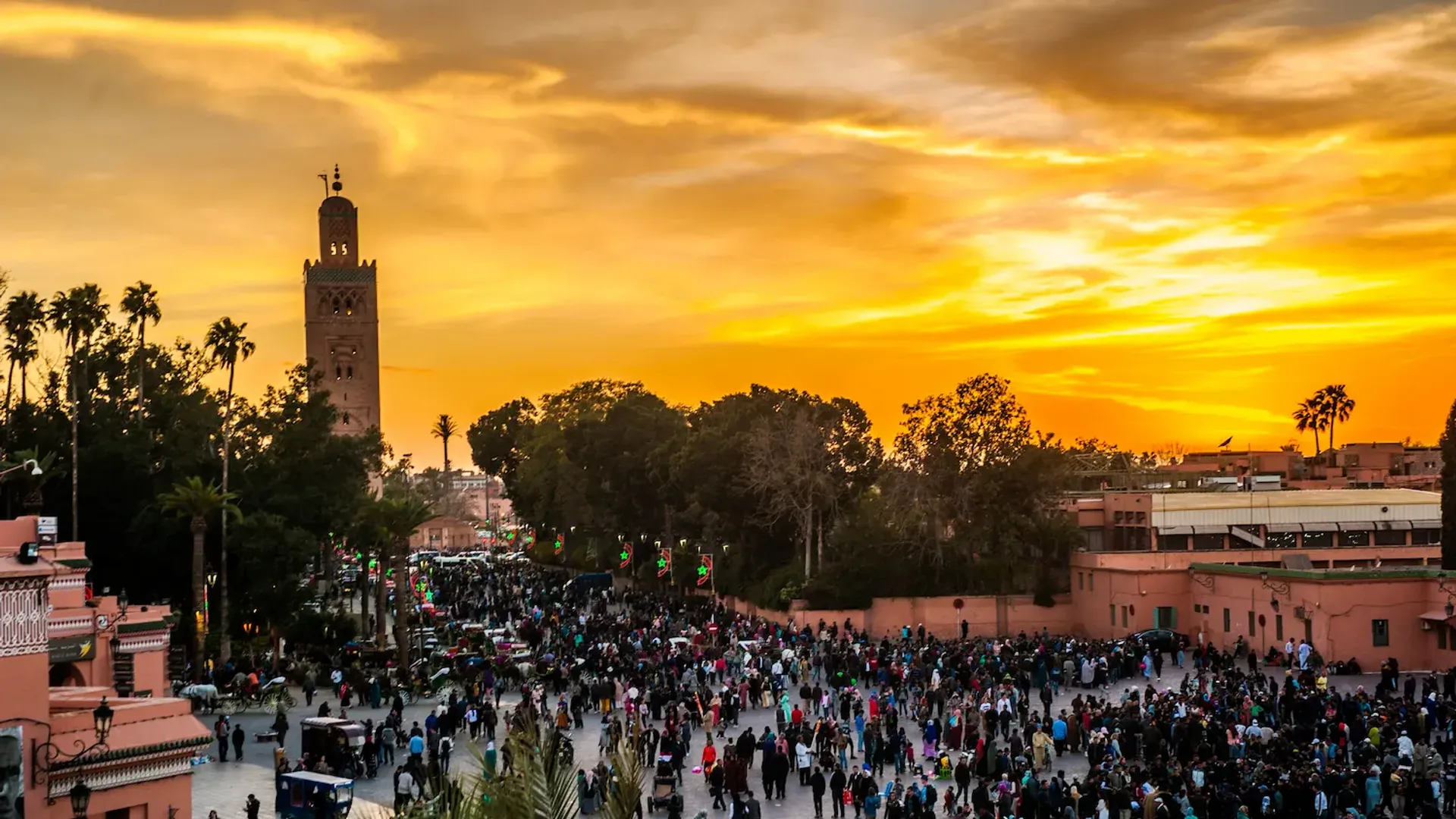
Nights come alive. After ftour, families pour out until well past midnight. Jemaa el-Fnaa — always at its best at dusk — becomes something extraordinary during Ramadan evenings, and the cafés fill with a festive energy you will not see any other month.
Eating and drinking as a tourist
You are not expected to fast, and there is no law preventing non-Muslims from eating in public. But eating, drinking or smoking conspicuously in front of people who have not touched water since dawn is poor form. The workable rule: eat indoors or discreetly by day, then join the feast at night.
Hotels and riads serve breakfast and lunch as normal, tourist restaurants stay open in the main cities, and your picnic on a private tour is completely fine — your driver will find you a comfortable, discreet stop. What you should absolutely do is experience ftour itself at least once: the table fills with dates, harira (the tomato-lentil soup that breaks the fast nationwide), chebakia pastries dripping with honey, msemen flatbreads and hard-boiled eggs. Many riads will invite you to join theirs if you ask.
Travelling during Ramadan? Our private tours run right through the month — we simply build the day around the rhythm, with an earlier start, a relaxed lunch stop for you, and a finish that gets everyone home for ftour. Browse all tours or message us on WhatsApp; driver tours are per vehicle for up to 9 guests with free cancellation up to 24 hours before.
Etiquette: the five rules that matter
- Do not eat, drink or smoke openly in the street by day. Indoors, in vehicles and at tourist restaurants is fine.
- Dress a notch more modestly than usual. Our what to wear in Morocco guide covers the baseline; during Ramadan, lean conservative.
- Expect some short tempers by late afternoon — a month without daytime water or coffee is hard. Patience is the kindest currency.
- Never offer food or cigarettes to someone fasting, even out of politeness.
- Say "Ramadan Mubarak" — the goodwill it generates is instant and genuine.
Why Ramadan can be a brilliant time to visit
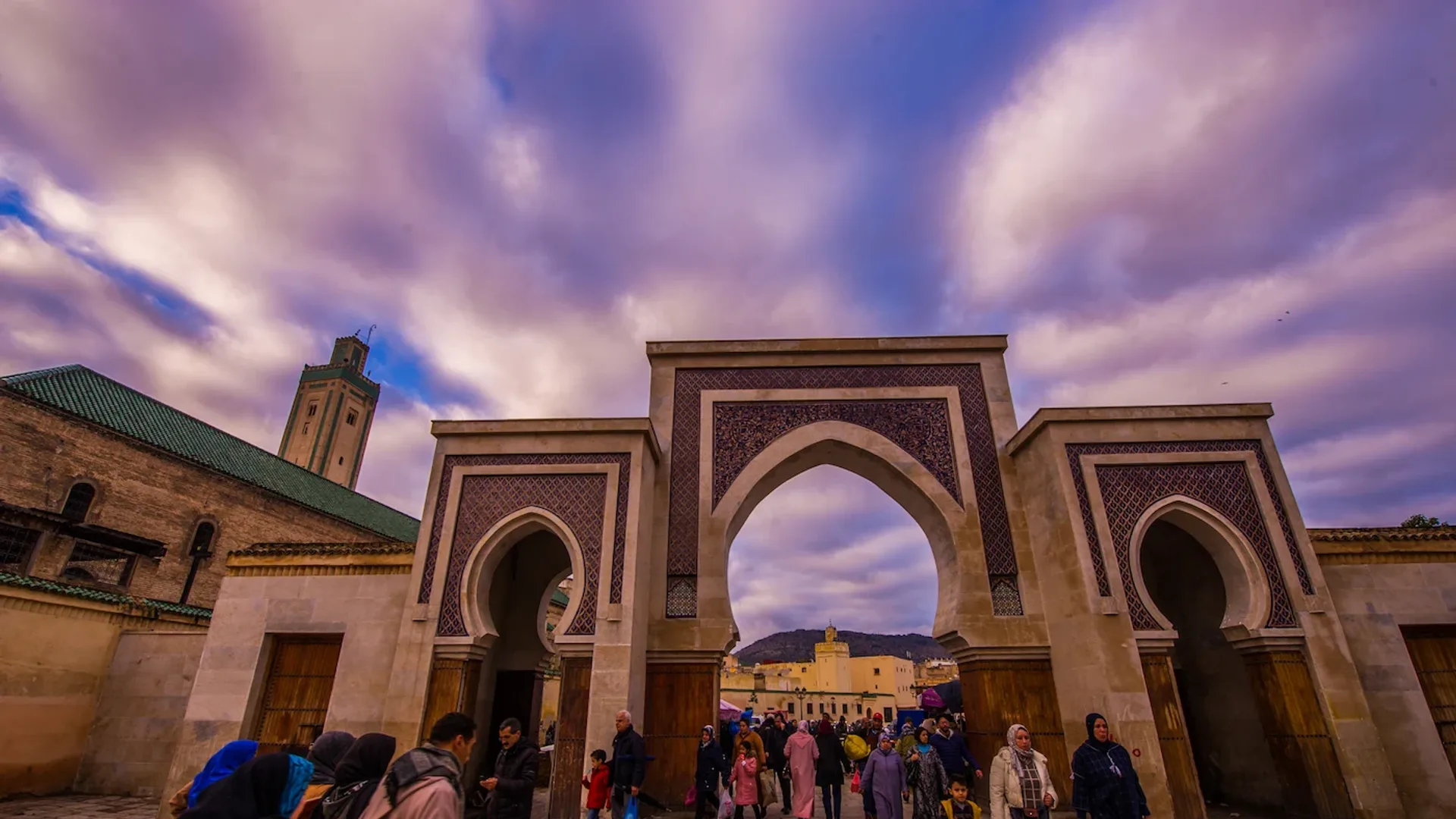
Here is the counter-intuitive part: some of our best trips of the year happen in Ramadan. Sites that are normally crowded — the Bahia Palace, the Saadian Tombs, the Fes medina's madrasas — are quietly pleasant by day. Hotel prices dip. And the evenings offer a window into Moroccan family life that no other month provides: the cannon or siren at sunset, the sudden communal exhale, streets full of families until 1 a.m.
A guided evening is the best way in. Our Marrakech food walking tour becomes a post-ftour feast crawl during Ramadan, and a private day in Fes can be paced to end on a terrace overlooking the medina just as the fast breaks — one of the most moving moments in Moroccan travel. Private driver tours in Fes start at 2,500 MAD per vehicle, so a family or small group shares one fixed price rather than paying per person.
Eid al-Fitr: the one time things really close
The two or three days of Eid al-Fitr at the end of Ramadan are Morocco's biggest family holiday. Expect widespread closures of shops, banks and many restaurants on the first day, heavy intercity traffic as families travel, and a joyful, dressed-up atmosphere everywhere. It is a lovely thing to witness — just do not schedule croucial logistics, big shopping plans or a long road transfer for Eid day itself.
So should you avoid Ramadan?
Avoid it if your trip is built around nightlife, long café days and complete flexibility of restaurant choice. Embrace it if you want thinner crowds, lower prices and a cultural layer most visitors never see. Either way, the country works: tours run, monuments open, hotels feed you. It is simply Morocco on a different clock — and knowing the clock is most of the battle. For how Ramadan compares with the rest of the calendar, see our best time to visit Morocco guide.
FAQ
Can tourists eat during the day in Ramadan?
Yes. The fasting obligation applies to Muslims, and hotels, riads and tourist restaurants serve non-fasting guests throughout the day in the main cities. The courtesy is simply to eat indoors or discreetly rather than snacking in the street.
Are tours and attractions open during Ramadan?
Almost all of them. Museums, palaces and medina monuments keep near-normal (sometimes slightly shortened) hours, and private tours run daily. The main adjustments are avoiding the hour before sunset for transfers and expecting some small restaurants to open only at night.
Is alcohol available in Morocco during Ramadan?
Partially. Supermarkets generally suspend alcohol sales for the whole month and many bars close, but licensed hotel bars and some tourist restaurants continue serving non-Muslim guests. If it matters, check with your hotel before booking.
Do drivers and guides work while fasting?
Yes — Ramadan is a normal working month across Morocco. We pace Ramadan itineraries sensibly: earlier starts, a proper midday break, and days that finish in time for everyone, guests and team alike, to enjoy the evening.